

Soft Stone:
A Center for Science and Technology
Competition Submission for the Ramallah Science and Technology Center
Ramallah, Palestine
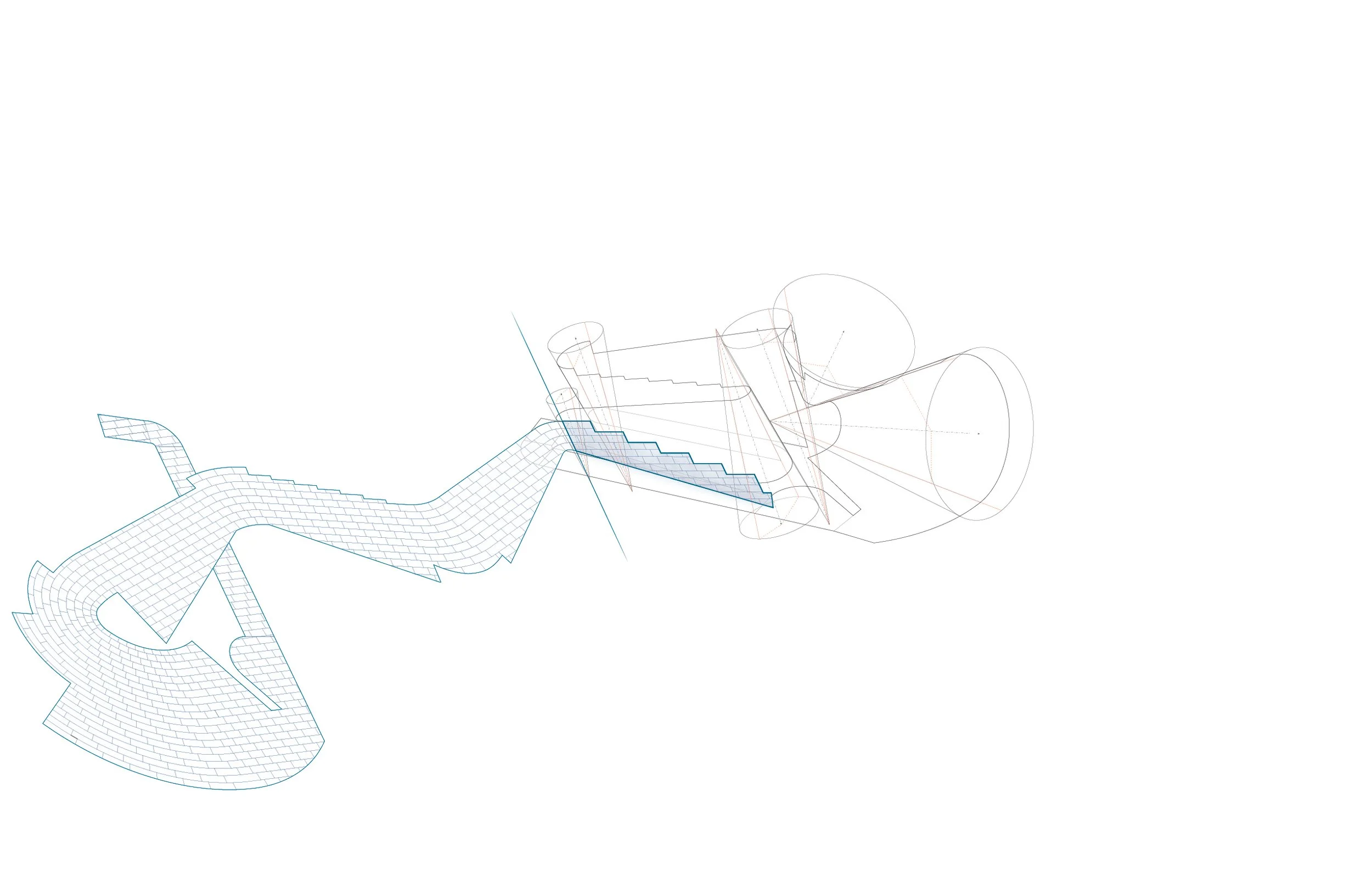
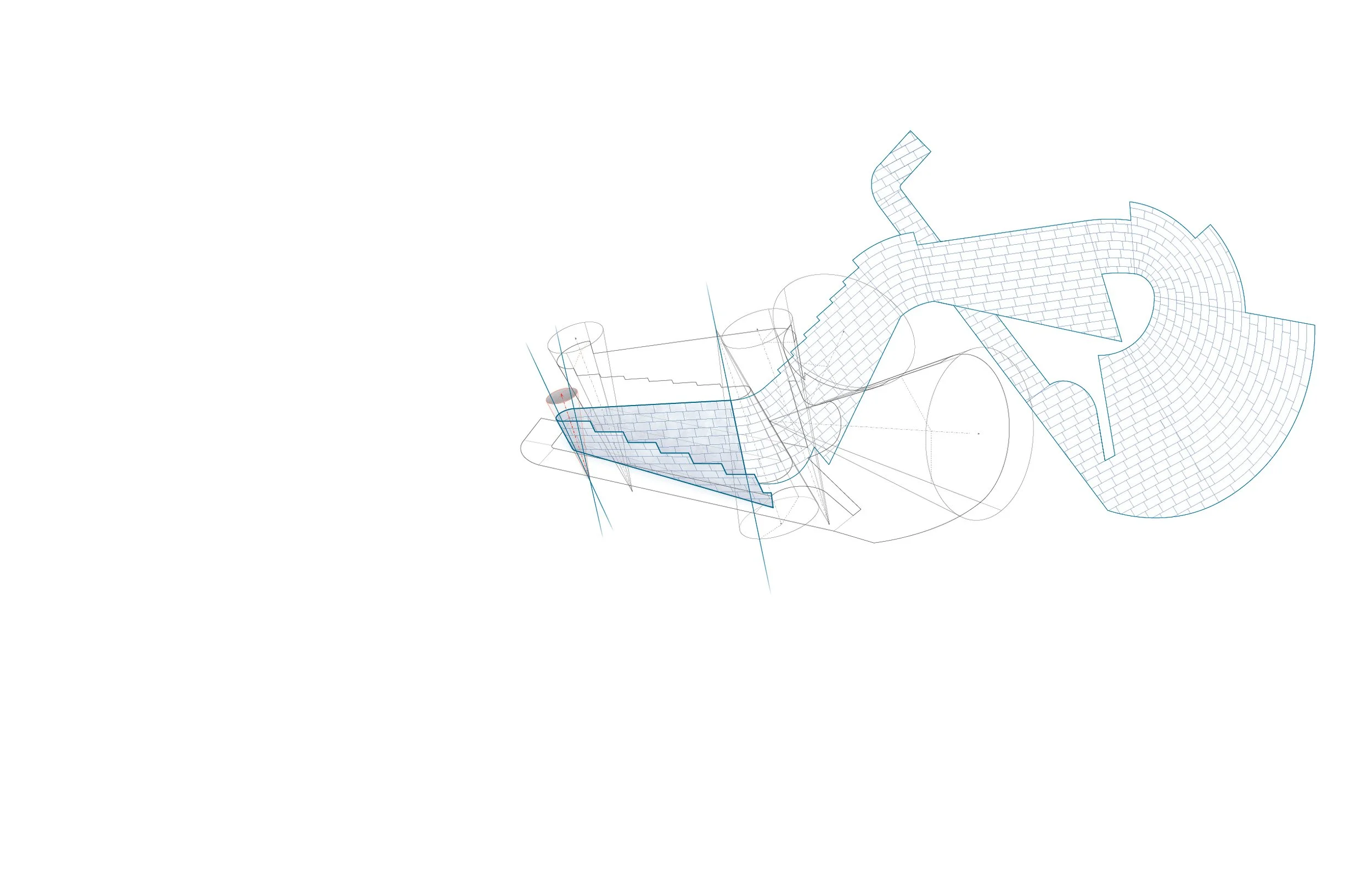
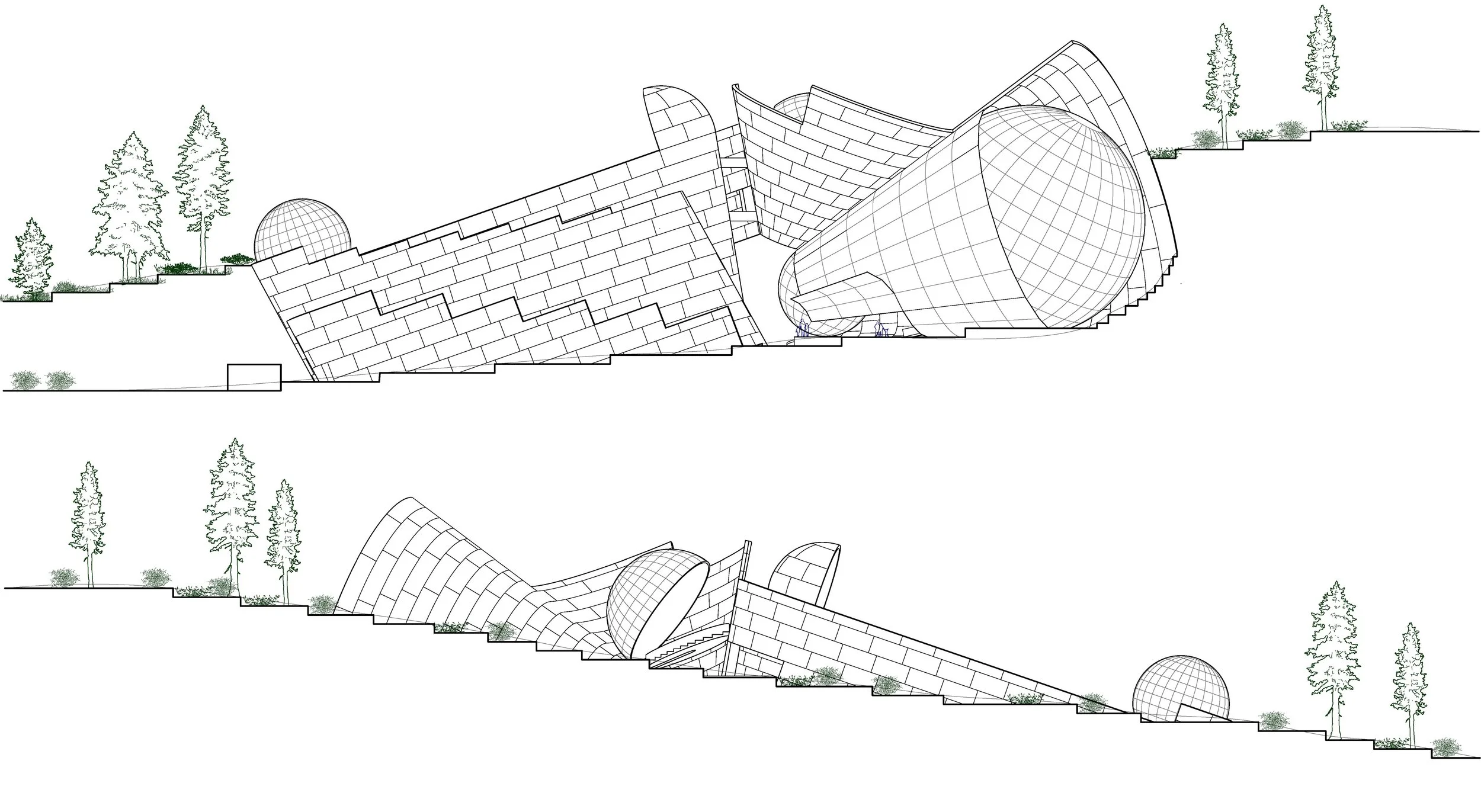
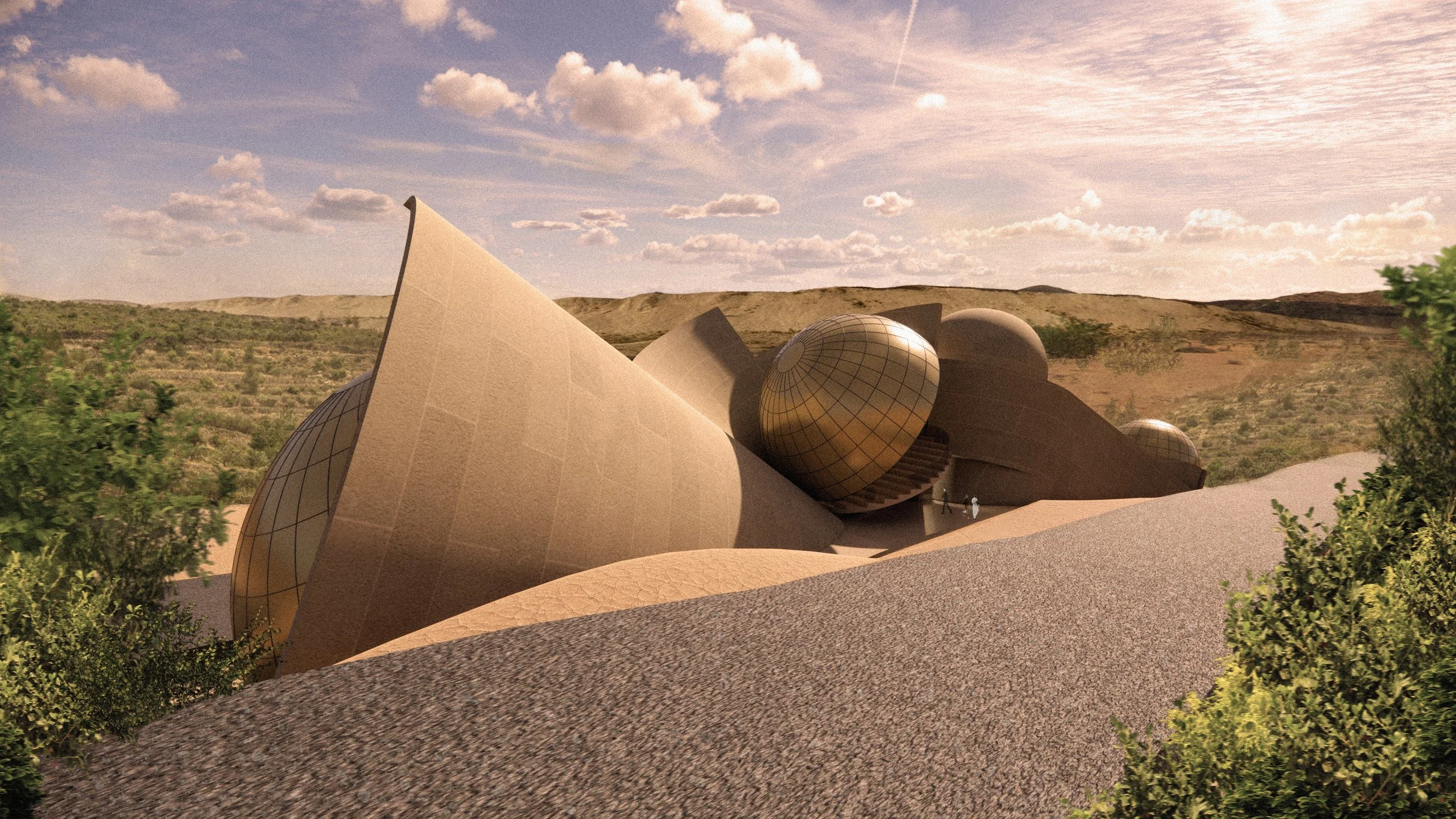
Architectural geometry serves as a link between the poetic and the technical, applying intellectual and analytical constructs to subjective bodily experience. The structure reads and functions as a ribbon—a single, supple surface meandering around the site, carving out the ground while at the same time blending into the landscape. The complex operates as both building and campus, where building and landscape are also intertwined.
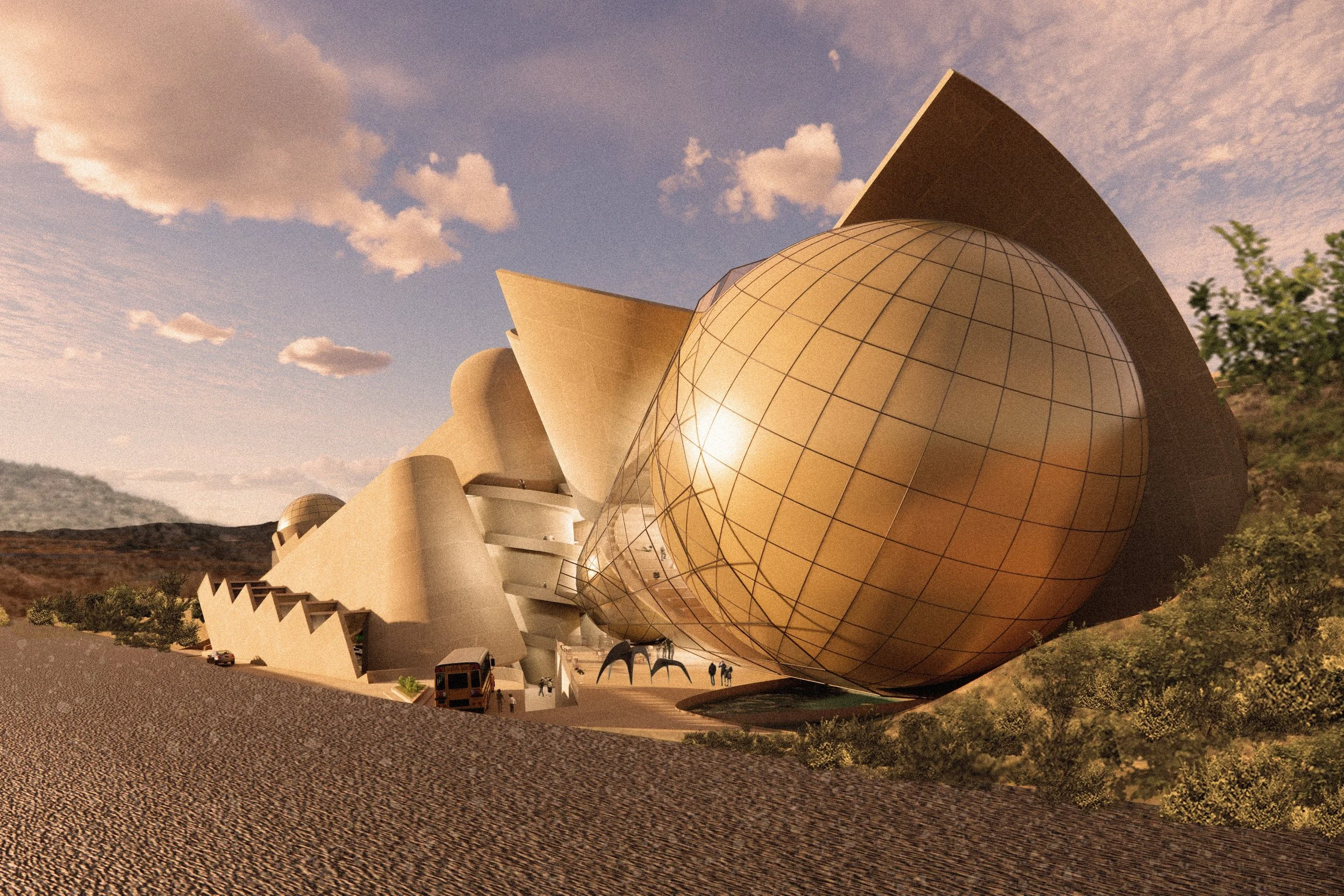
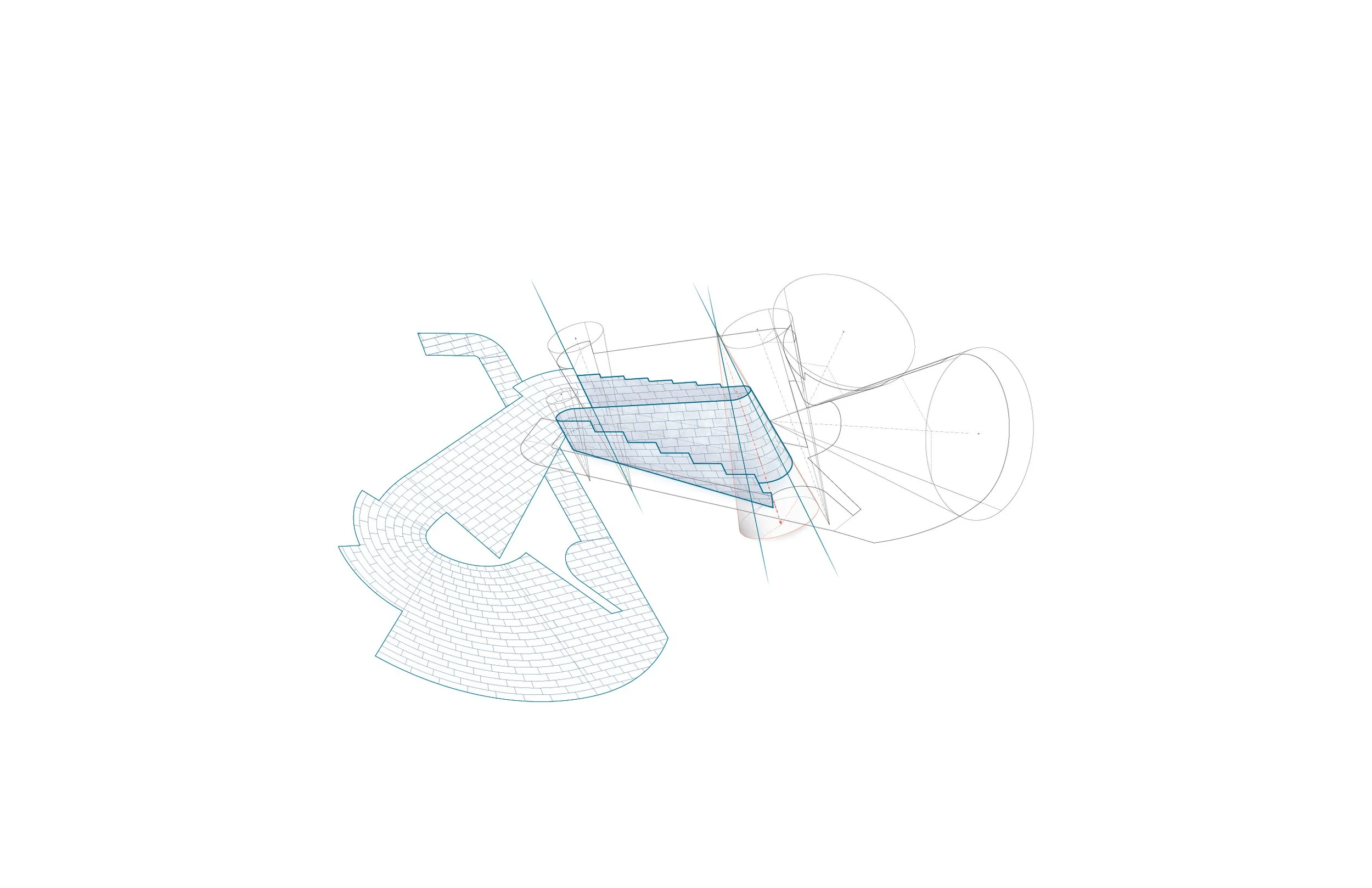
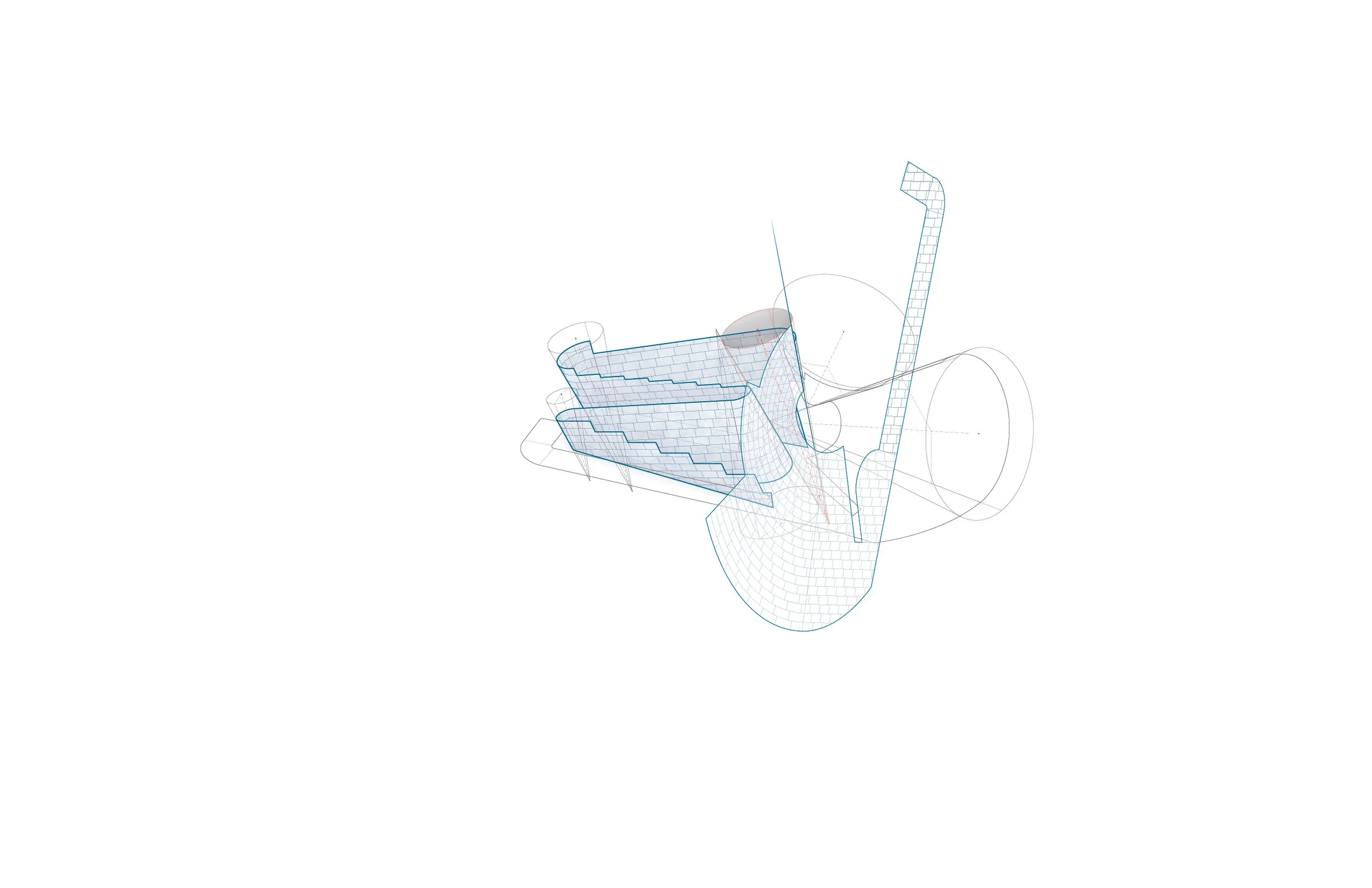
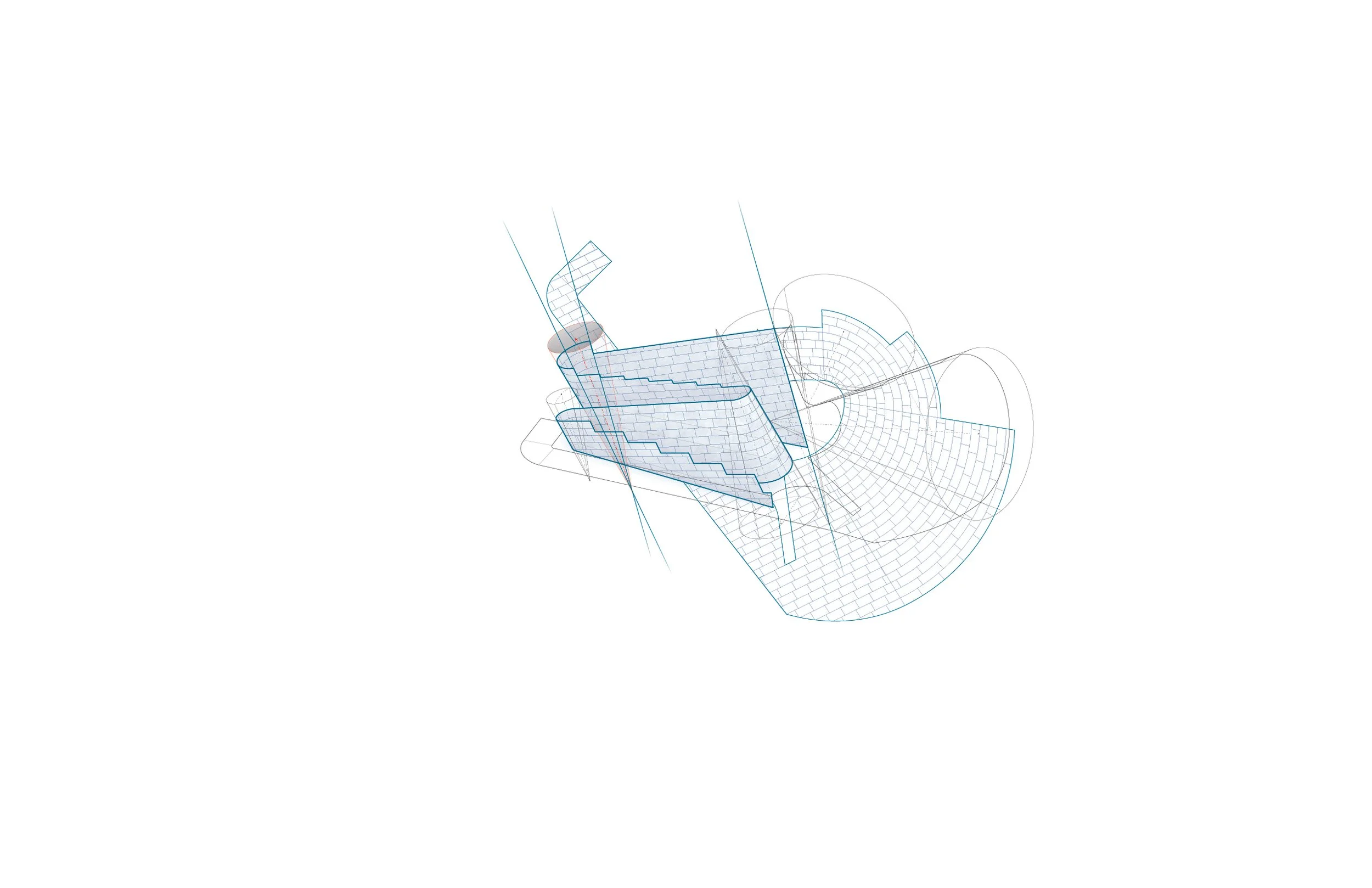
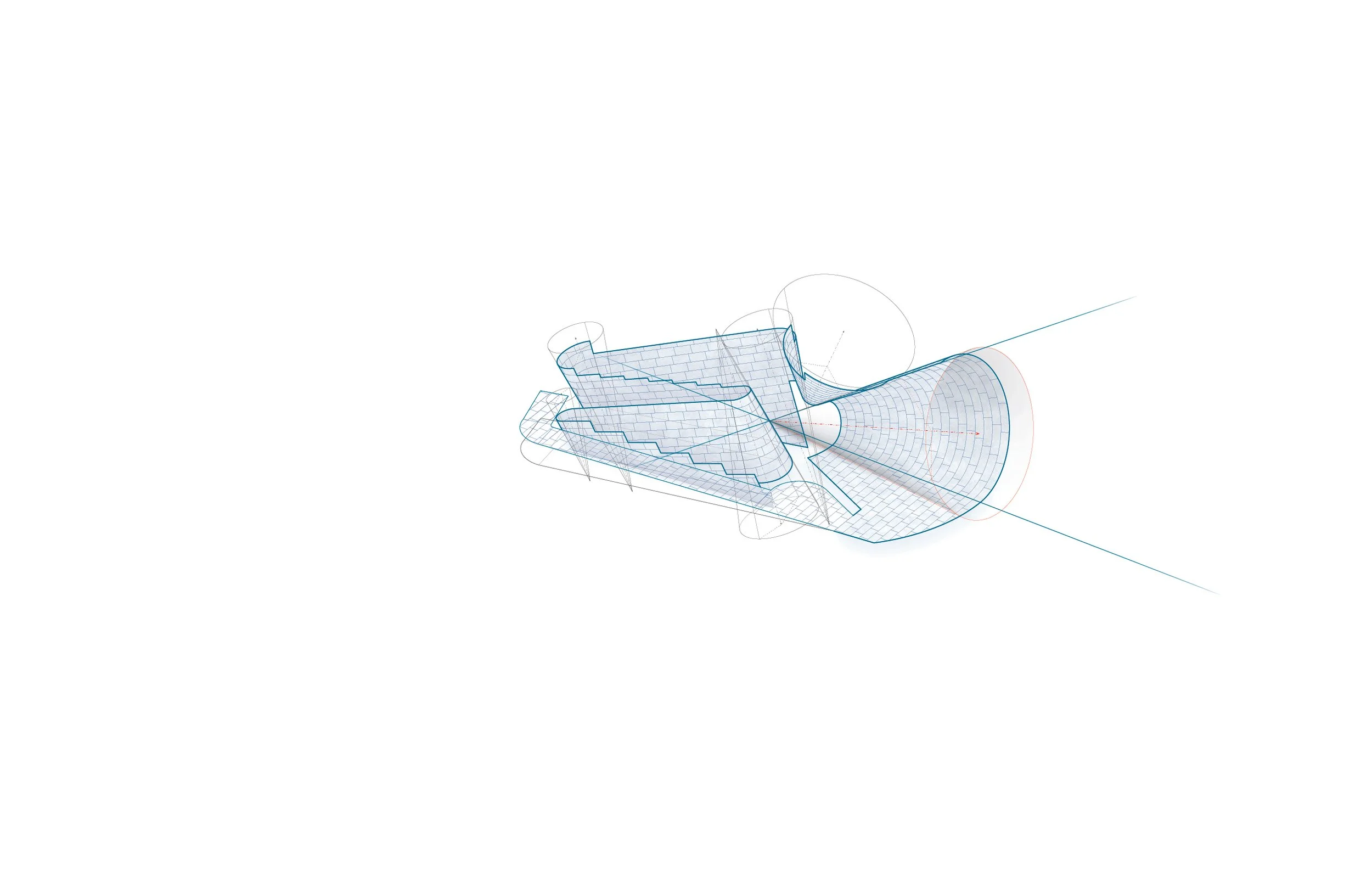
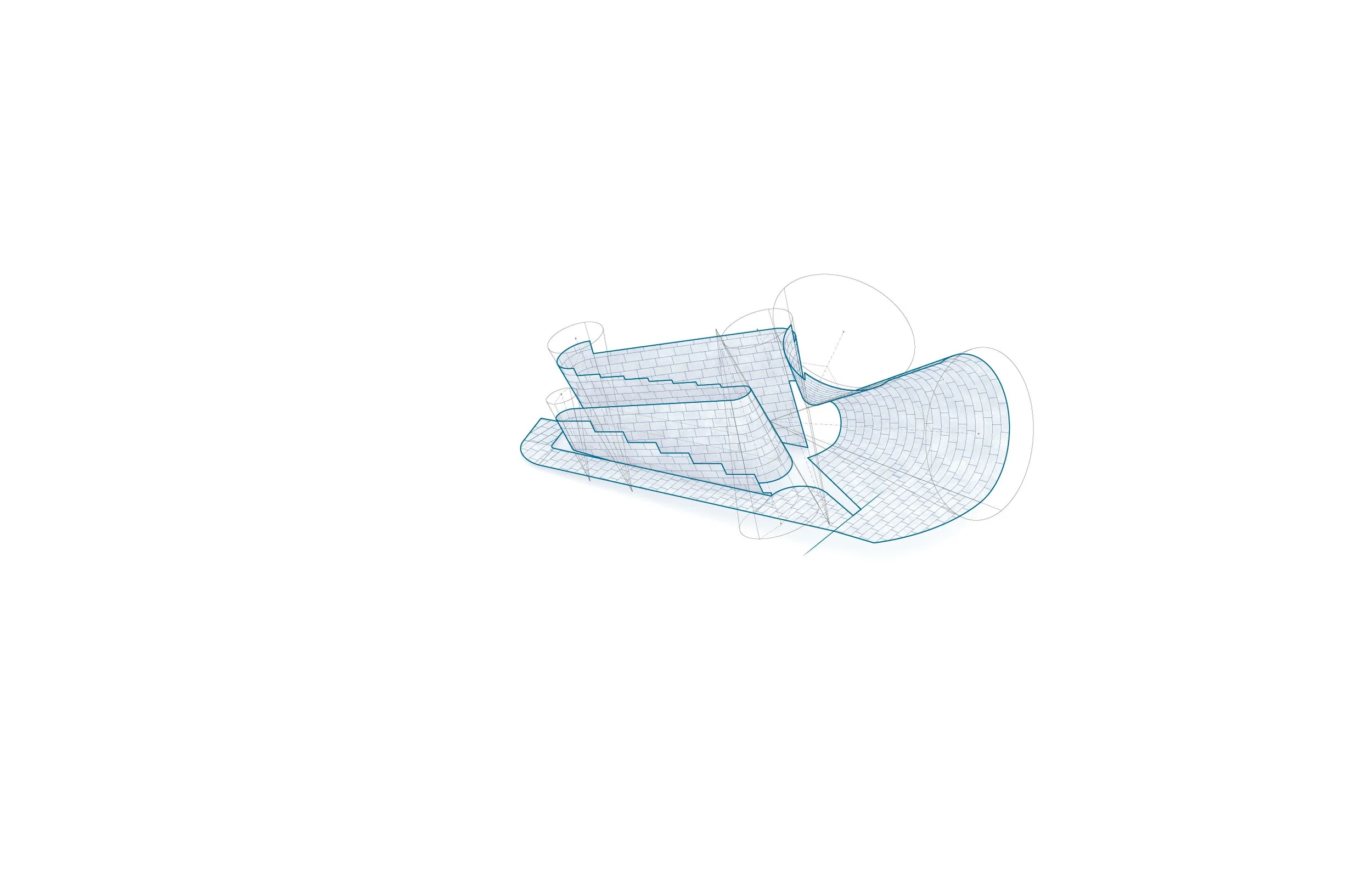
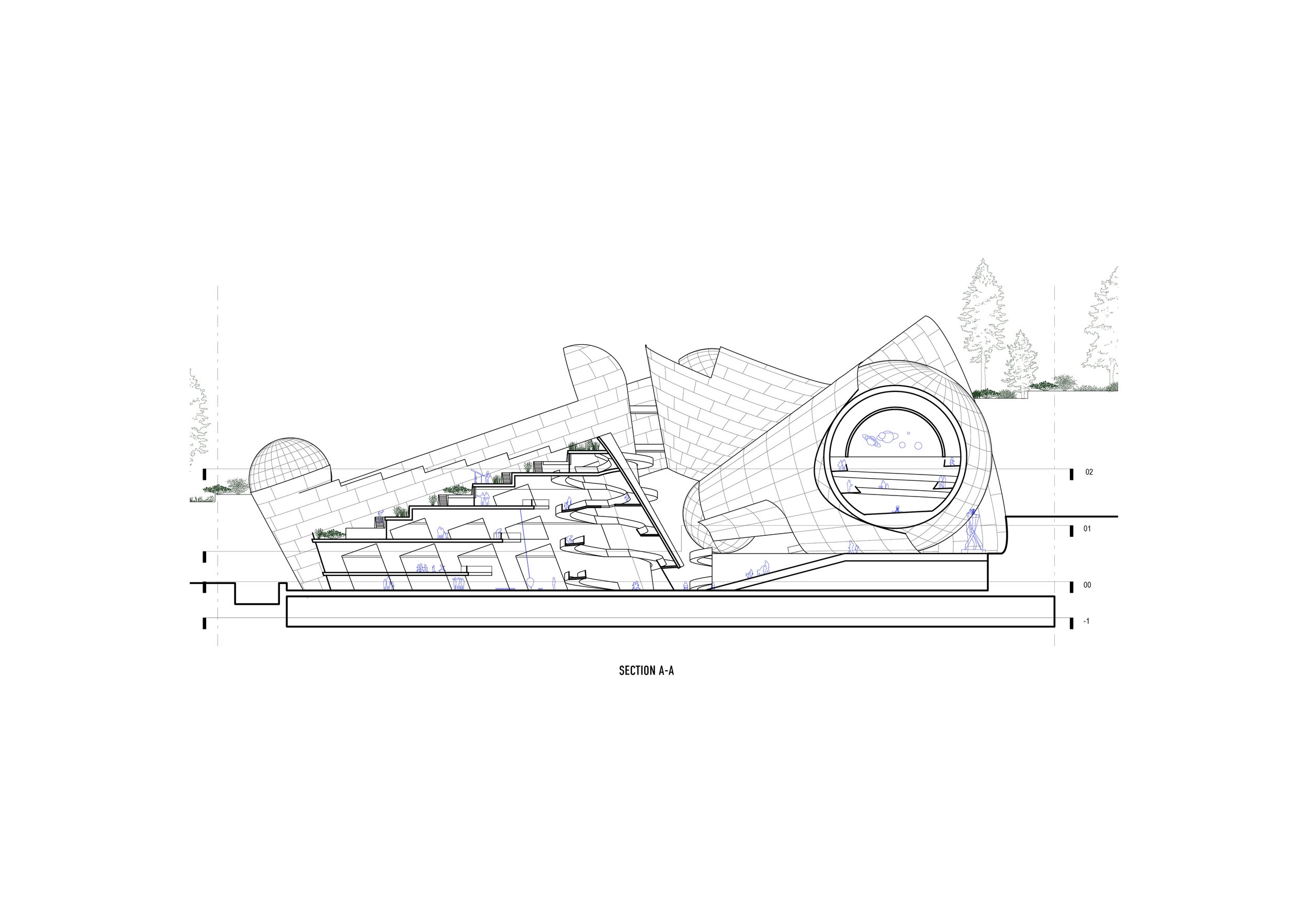
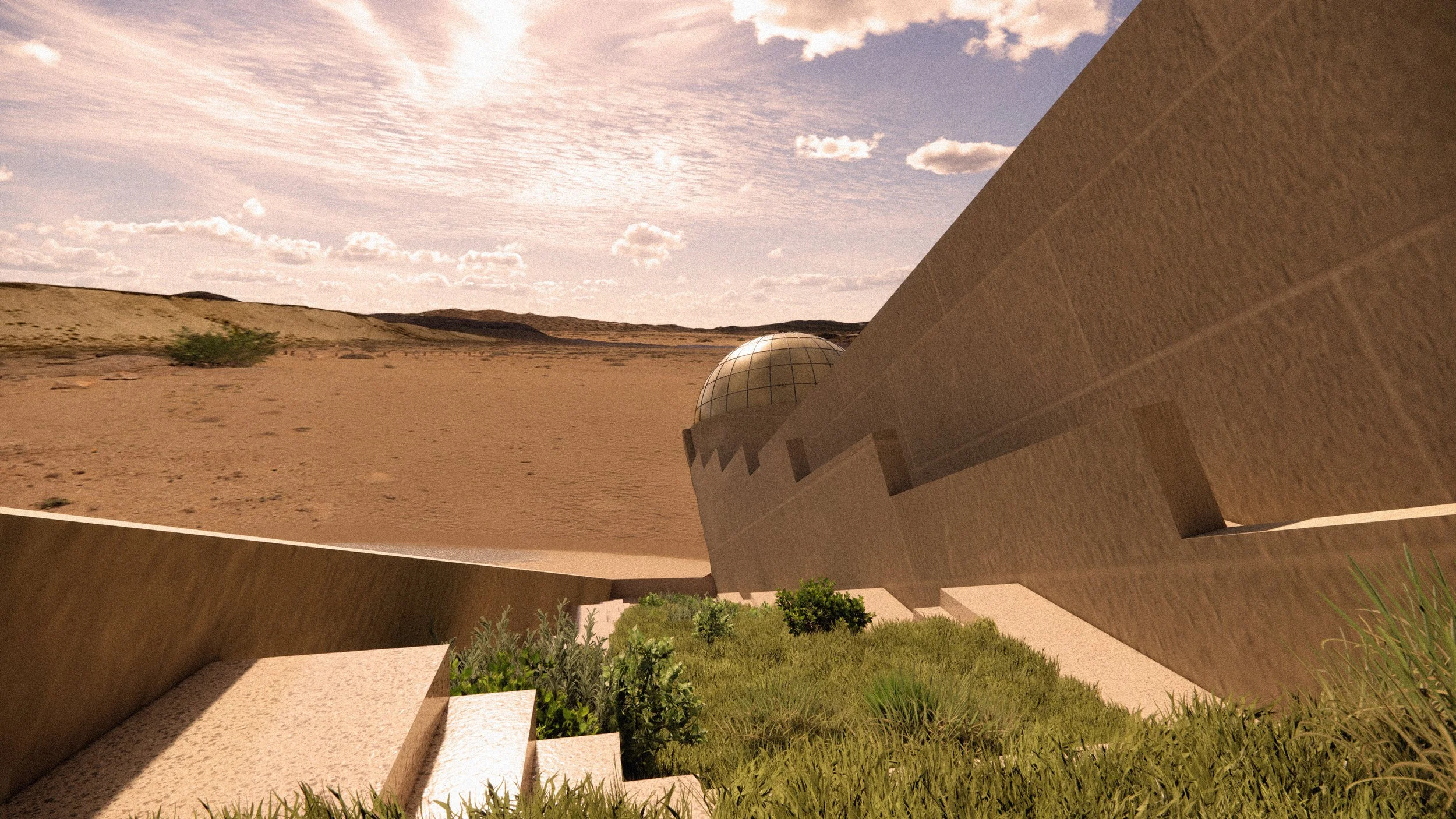
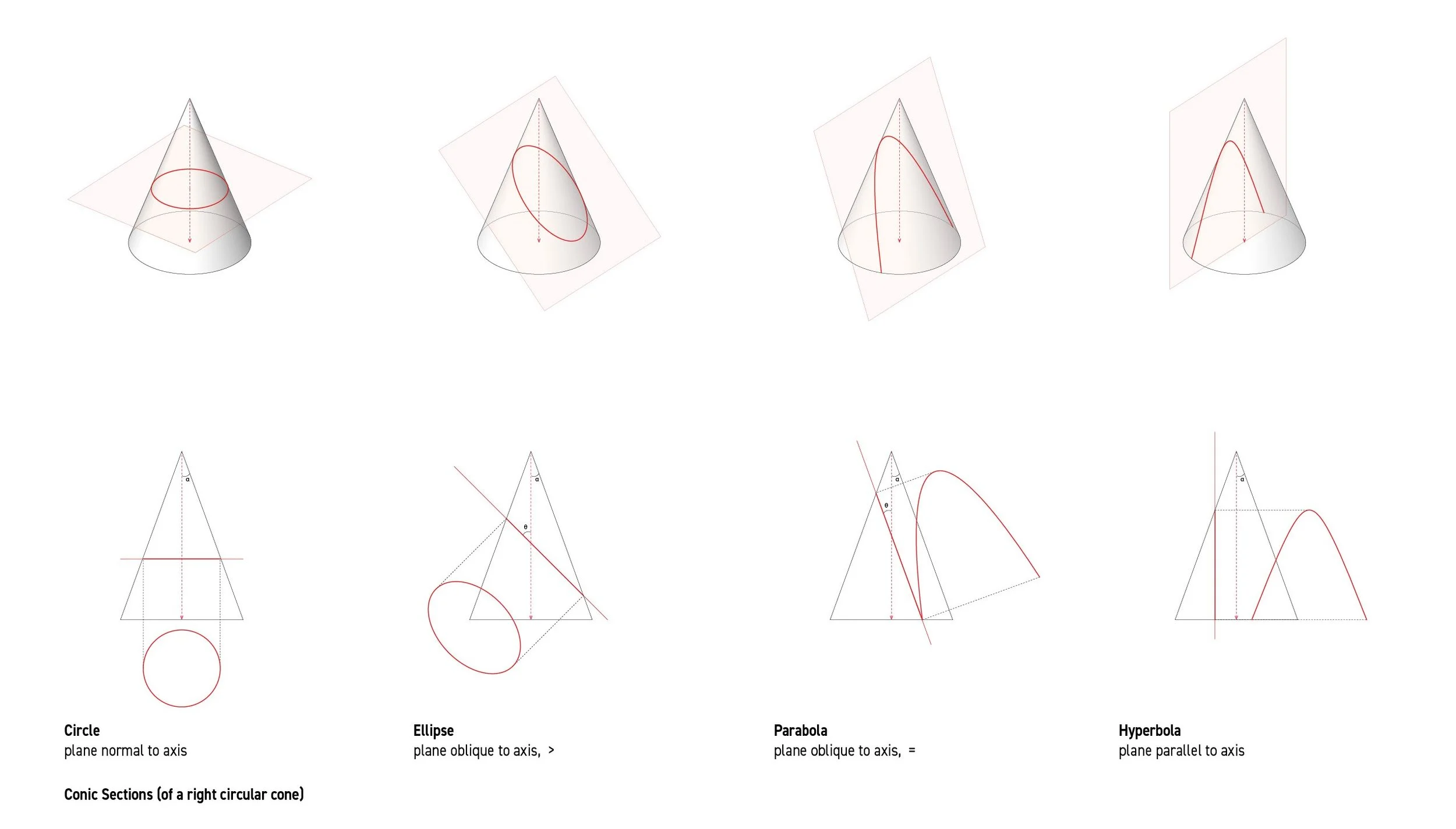
The stone ribbon surface, though read as continuous, is a piece-wise composition of cones, cylinders, and planes stitched strategically at tangent points. Conic surfaces have a natural relationship to material subdivision, structure, and circulation. Due to their tangencies, the coursing of the stone subdivision and seams can run continuously and uninterrupted around the entire ribbon. Because of this, the angles of the seams run parallel to the topography of the site throughout the meandering ribbon, reminding visitors about the steep nature of the landscape when viewing the diagonal angle of the seams relative to the level floor plates. At some points, the topography of the site is experienced through movement, with terraced roofs, ramps, and stairs. With an interest in standing out as a new icon in the city of Ramallah, this building also desires to be in dialogue with other icons in the city: the meandering terraces of the beautifully subtle Mahmoud Darwish museum, and the Palestine Museum, which blends building with landscape.
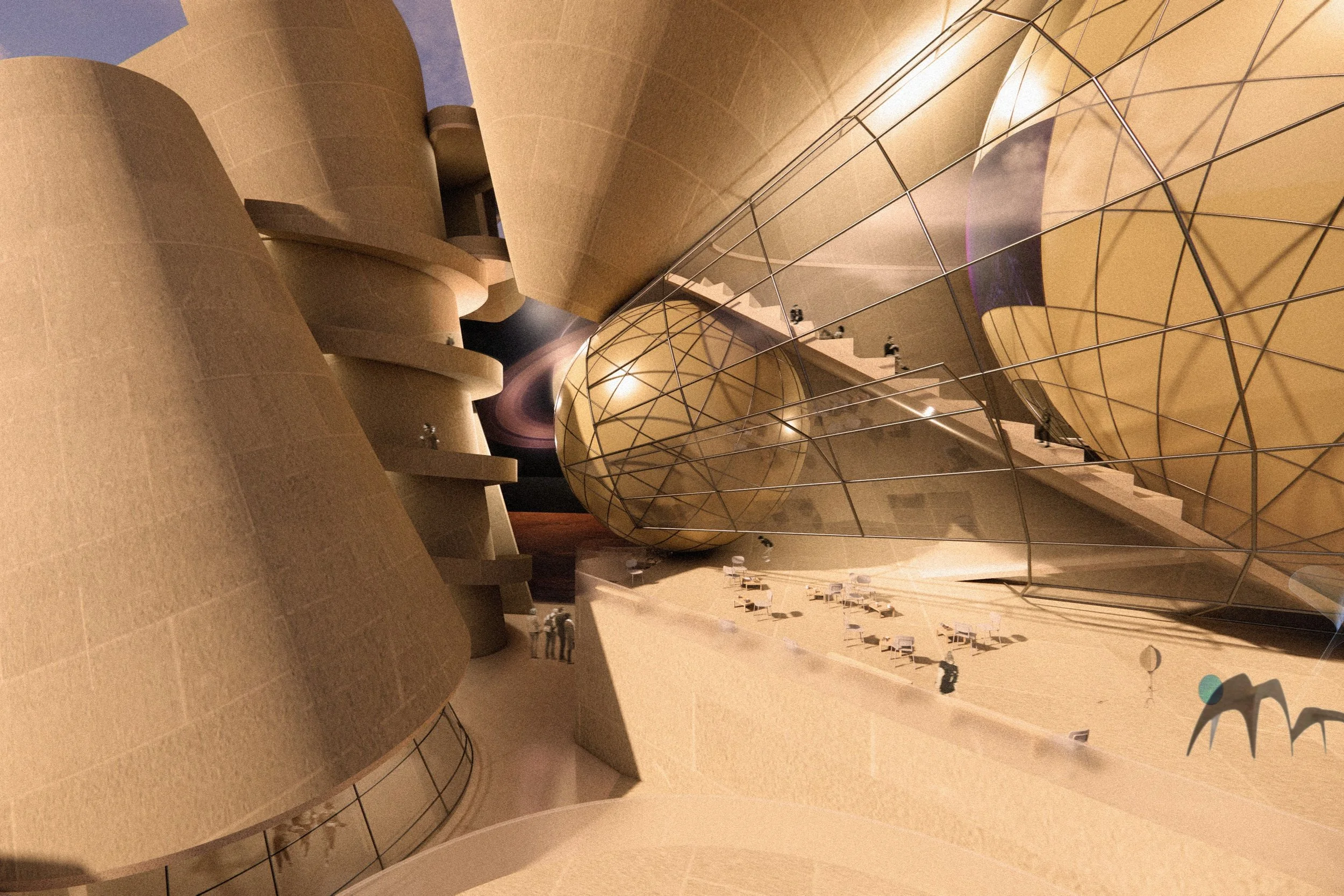
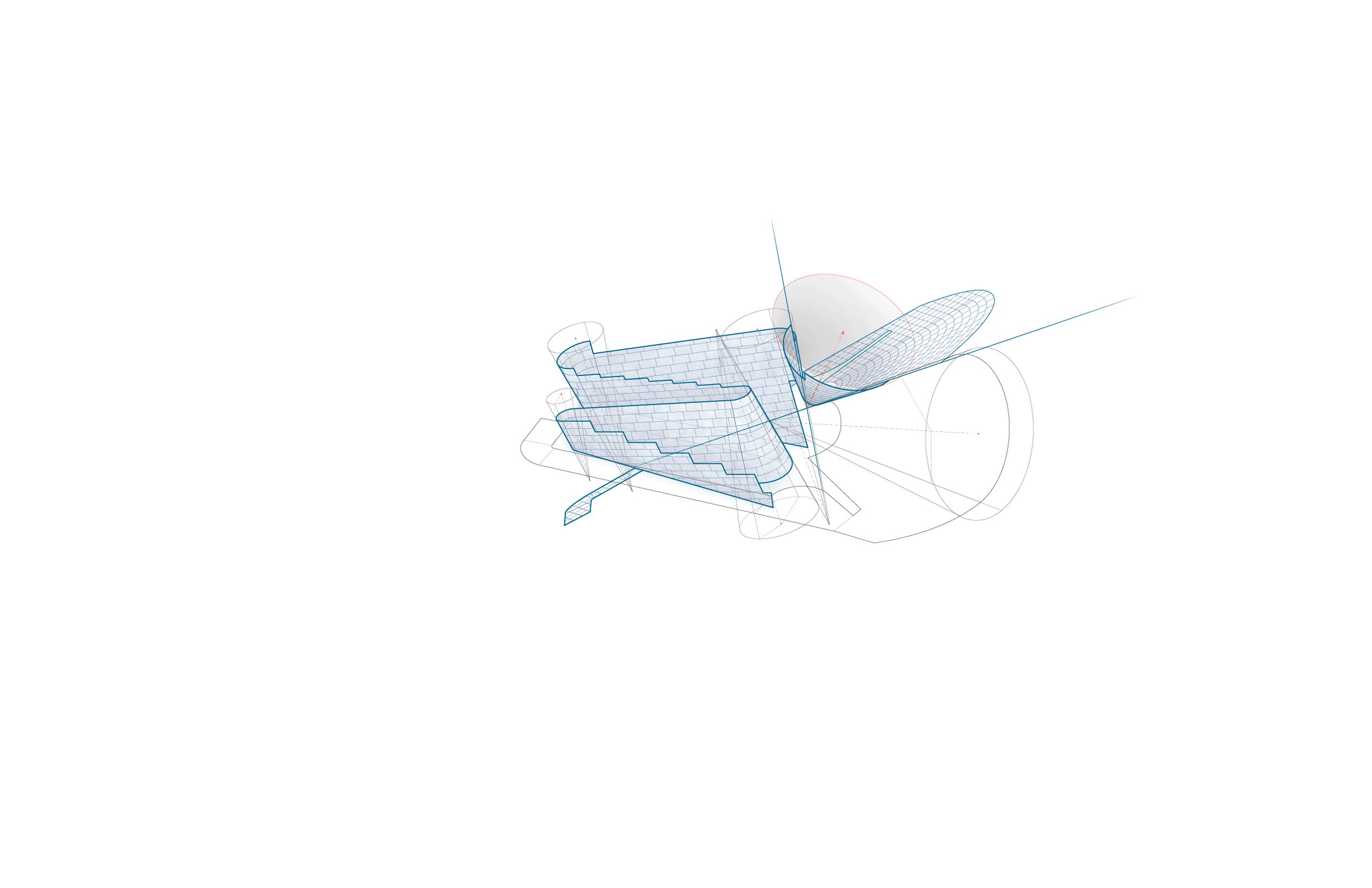
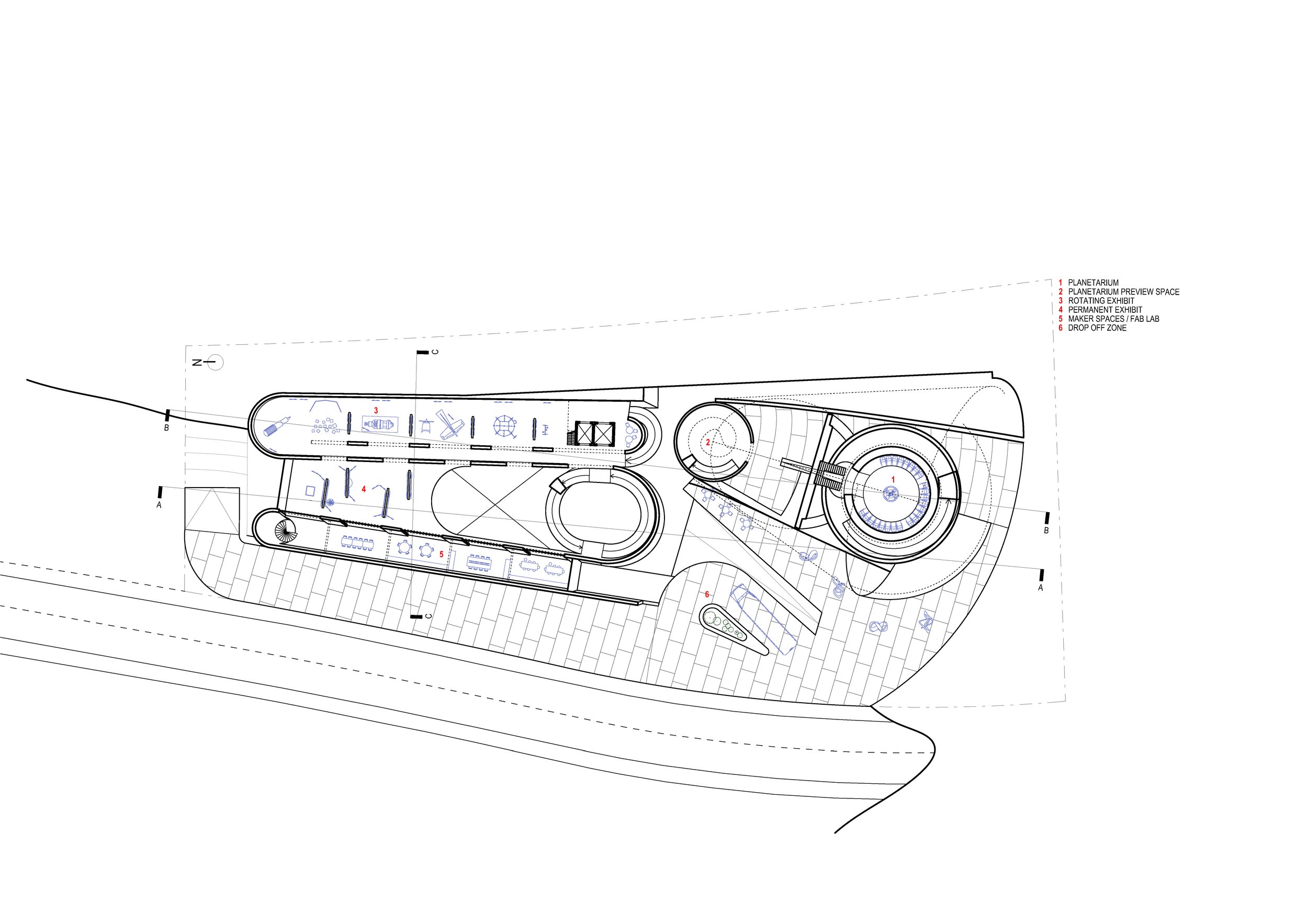
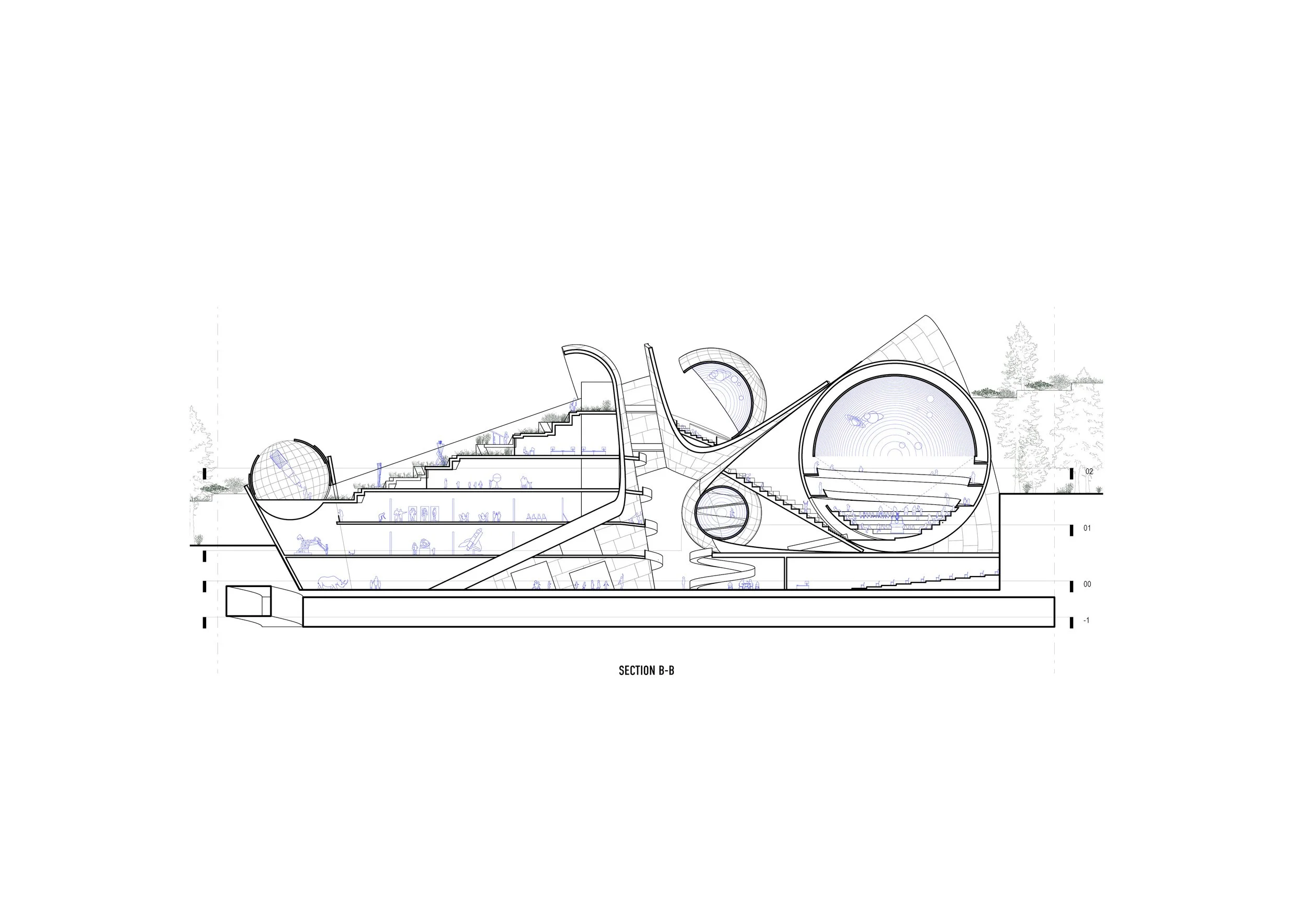
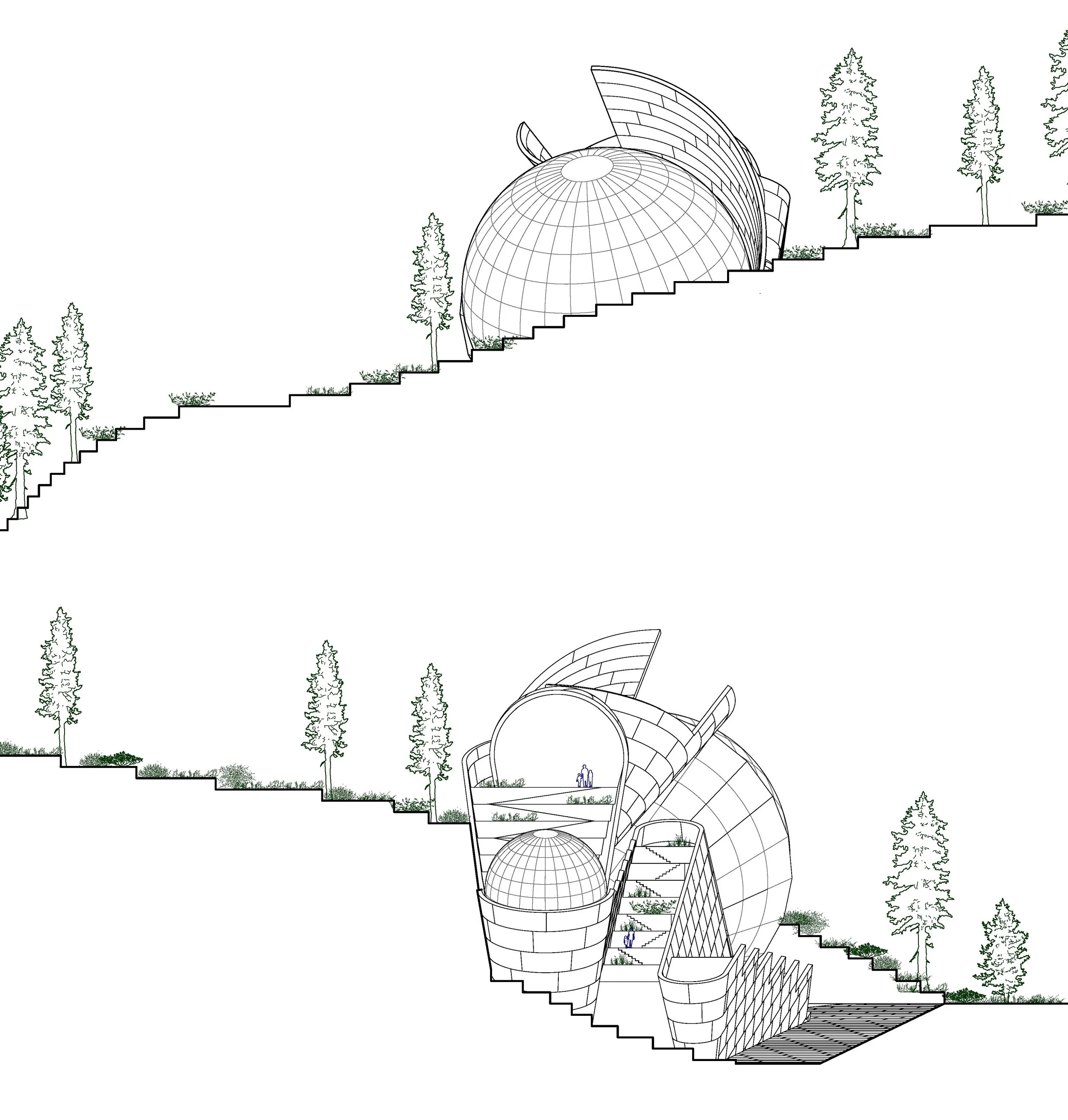
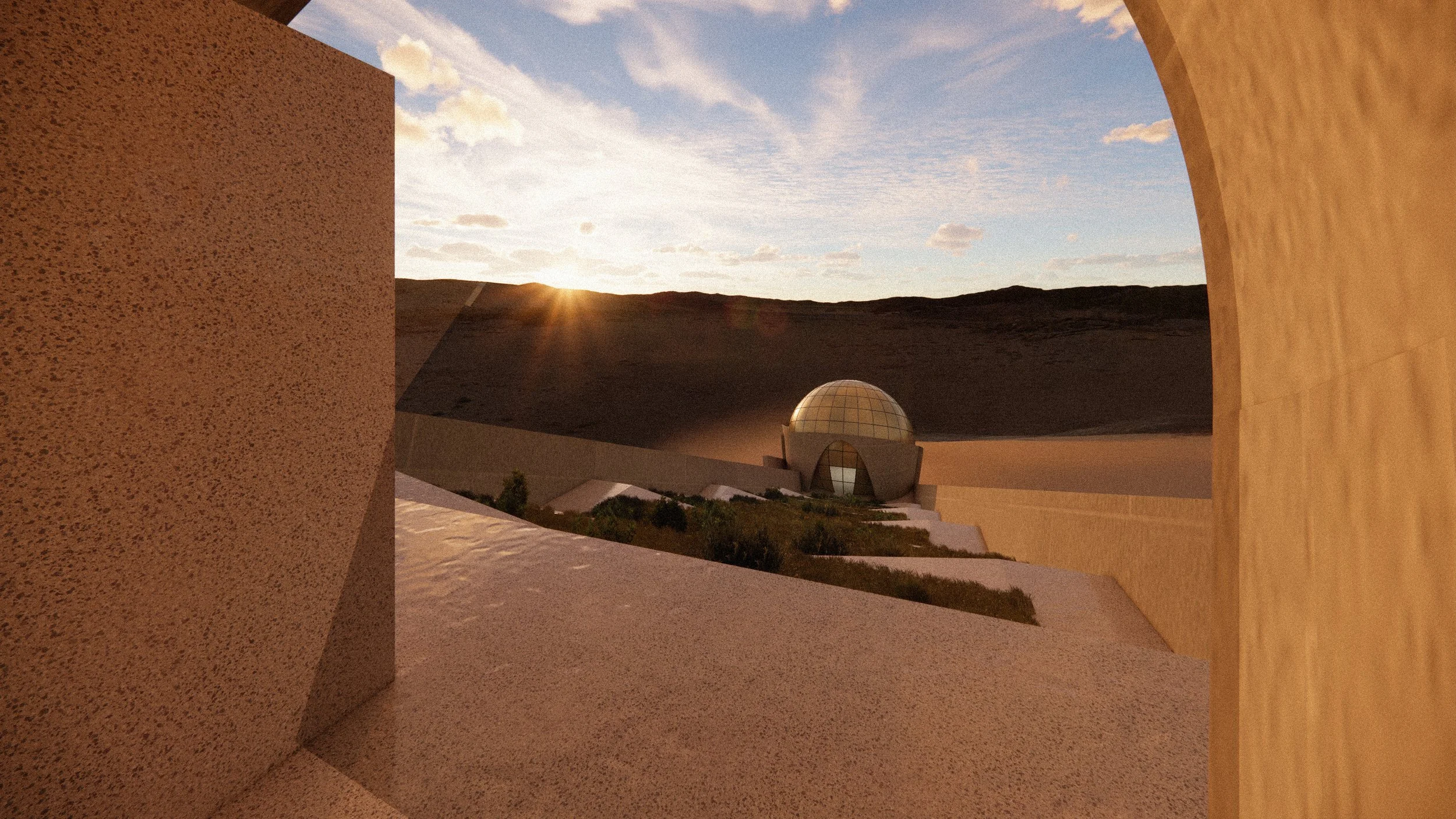
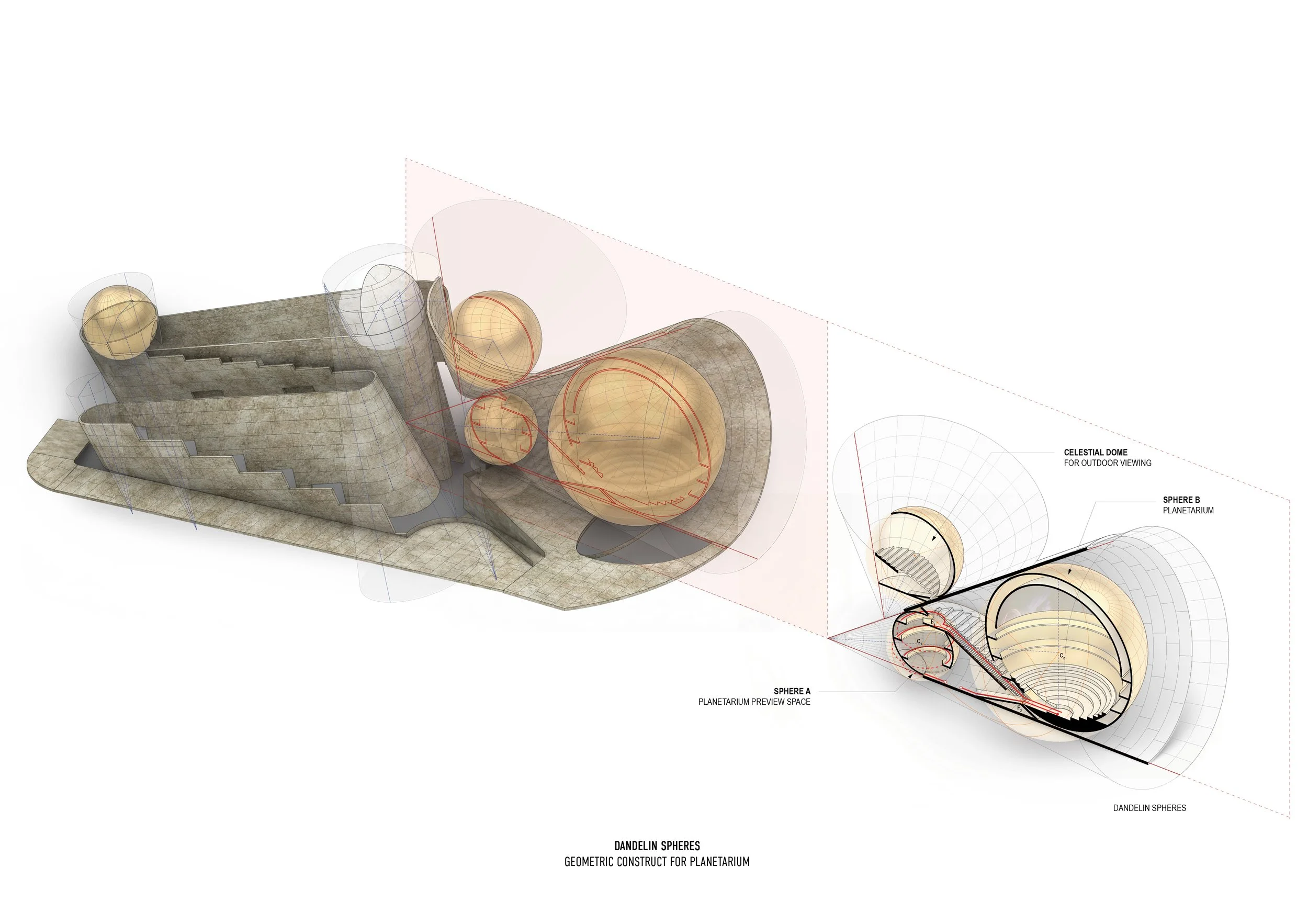
The conic surfaces contain ramps and stairs to redirect the users while also providing moments of panoramic views of the interior gallery spaces. Four spherical geometries nest tangent to these cones to provide an observatory, celestial dome for outdoor viewing, and two spheres for the planetarium complex: a small sphere, which contains a spiral ramp and serves as the planetarium preview space, leading to a terraced plane that descends into a second, larger sphere, which houses the planetarium itself.
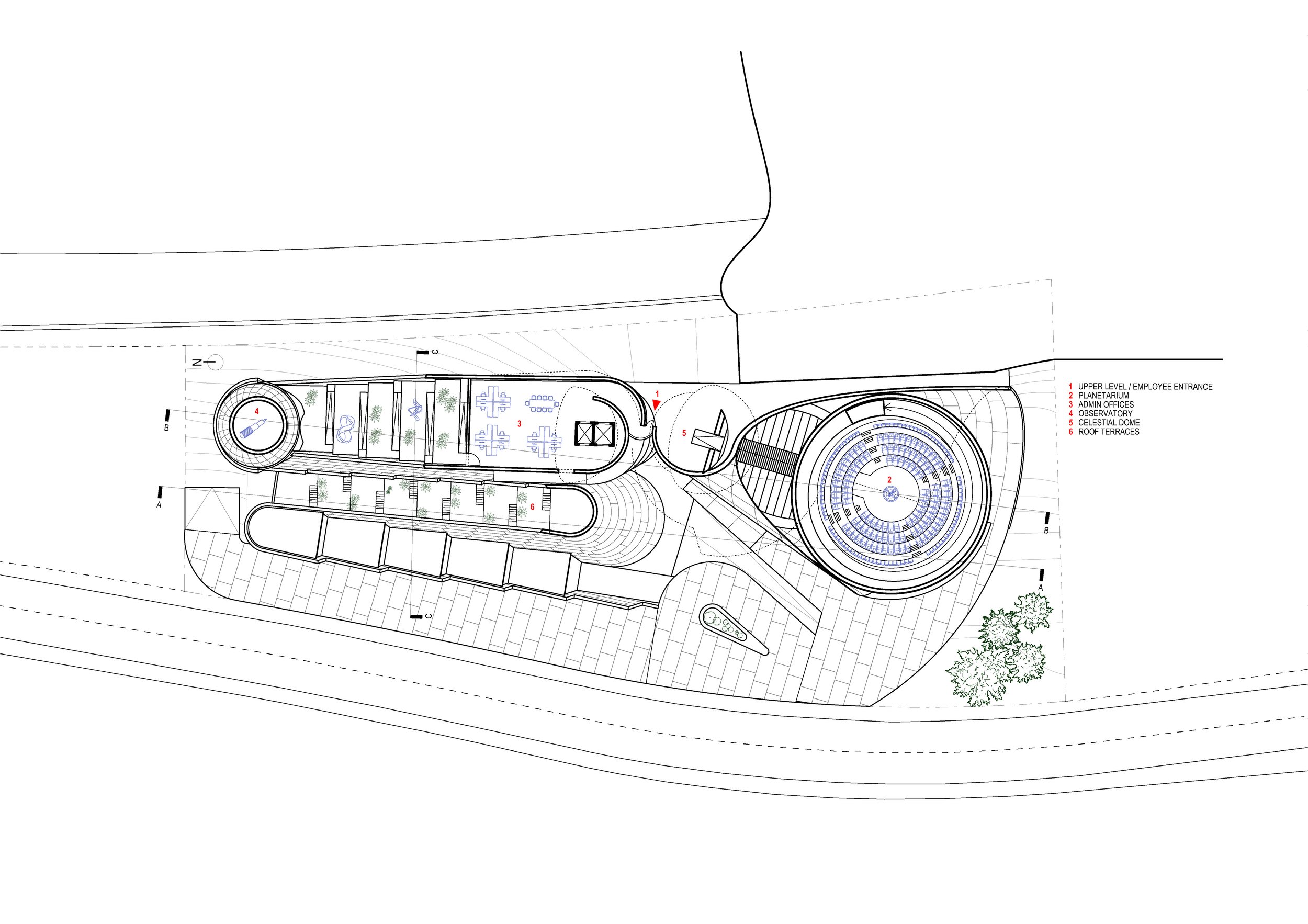
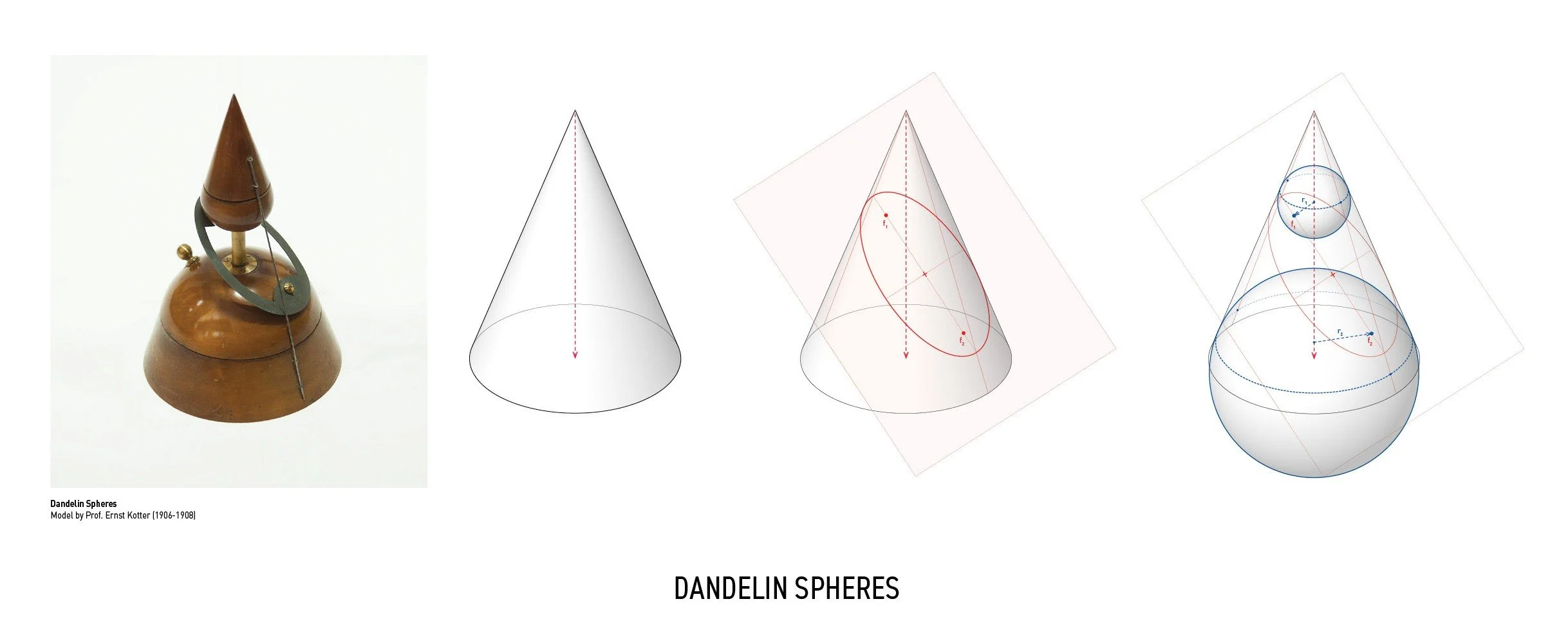
Conic surfaces allow the wall to become ground, blending building with landscape. The ribbon sequence culminates in the iconic planetarium complex, a volume with mathematical significance known as the Dandelin Spheres. This geometric phenomenon follows an axiomatic construct whereby any two spheres can be inscribed in a cone and both be tangent to the surface of the cone as well as to the two focal points of an elliptical plane. Here, the Dandelin spheres are activated spatially and programmatically—the small sphere is a preview space with a ramp that ascends to the top of the elliptical disk, which is used for raked seating for viewing, relaxing, and waiting. A stair descending along the major axis of the ellipse delivers the user to the second focal point, and the entry to the large sphere housing the planetarium. The planetarium is equipped with regular terraced seating at the base with reclined seats (static viewing), as well as a spiral ramp that wraps around the perimeter to offer users an opportunity to experience the projections in the planetarium while moving (dynamic viewing).
Entry Sequence and Movement through the Program
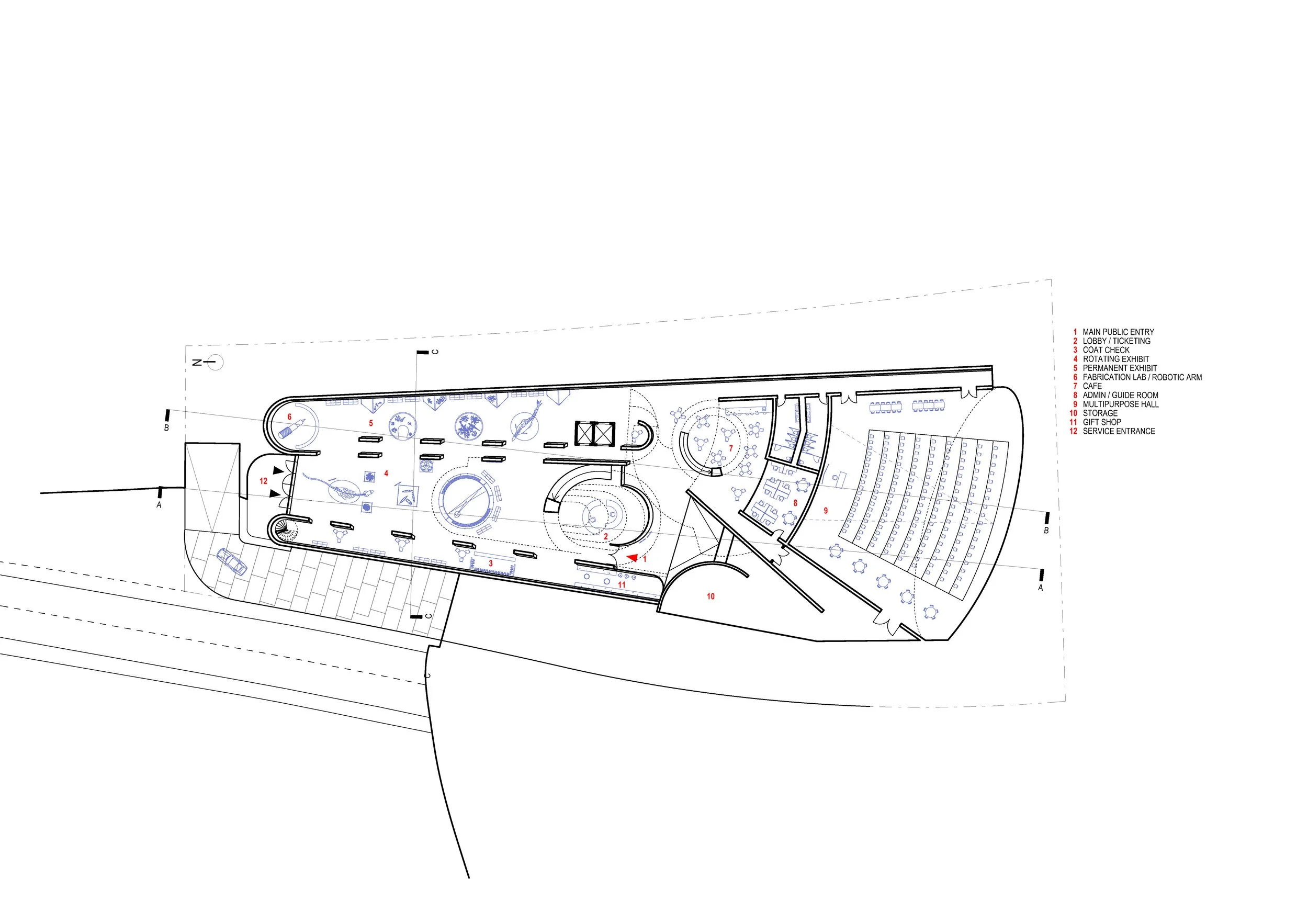
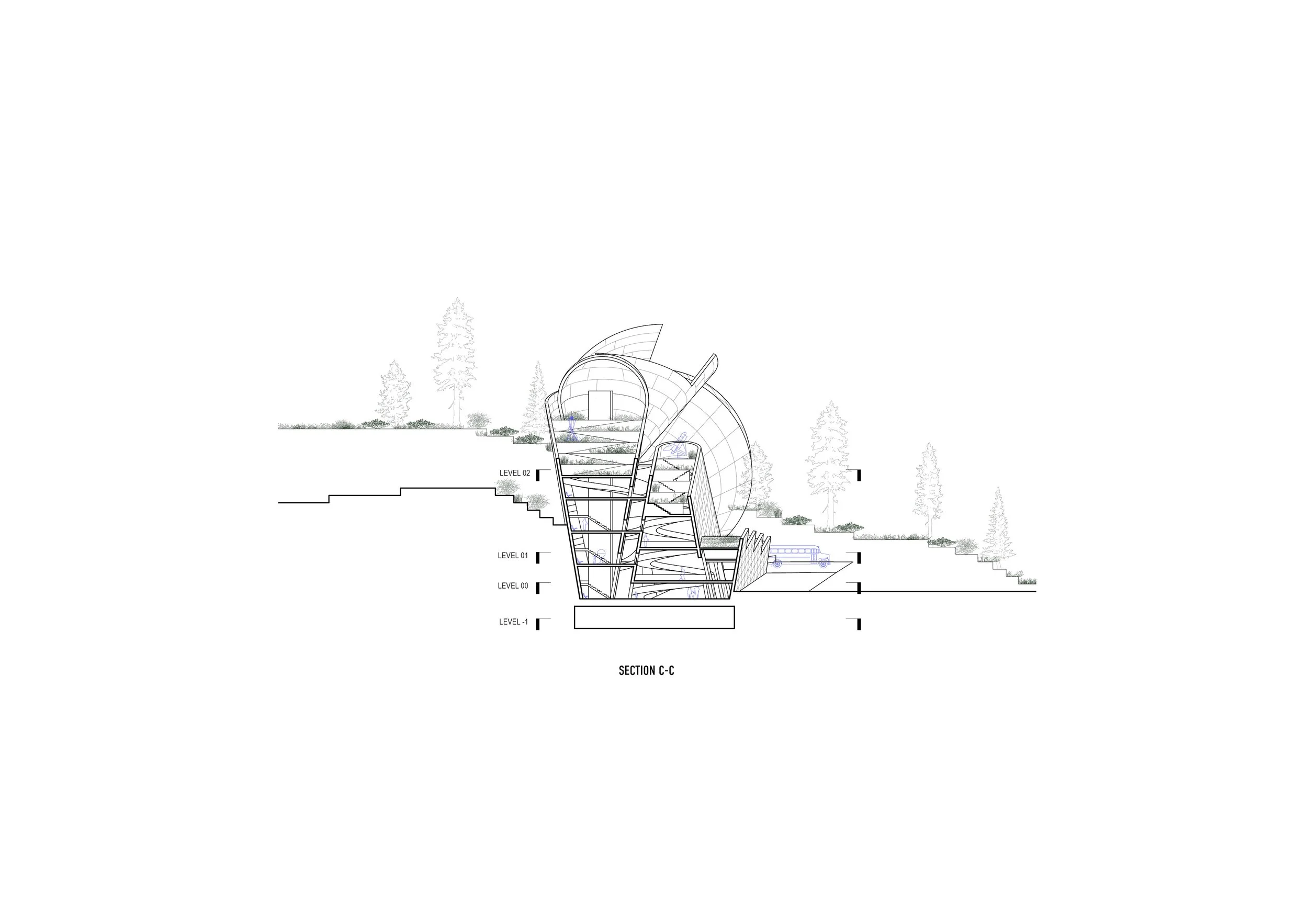
The meandering stone ribbon arranges the program into three discrete but linked bars on the site that run along the north-south direction. Each of these bars contains a major component of the program: 1) the west bar contains the maker spaces and fabrication facilities; 2) the middle bar contains the entrance, lobby, and temporary/rotating exhibition space; and 3) the east bar contains the permanent collection, with administrative offices at the very top. While operating as three discrete zones, the three bars are open to one another and allow for many opportunities of visual and physical connection across the stone wall.
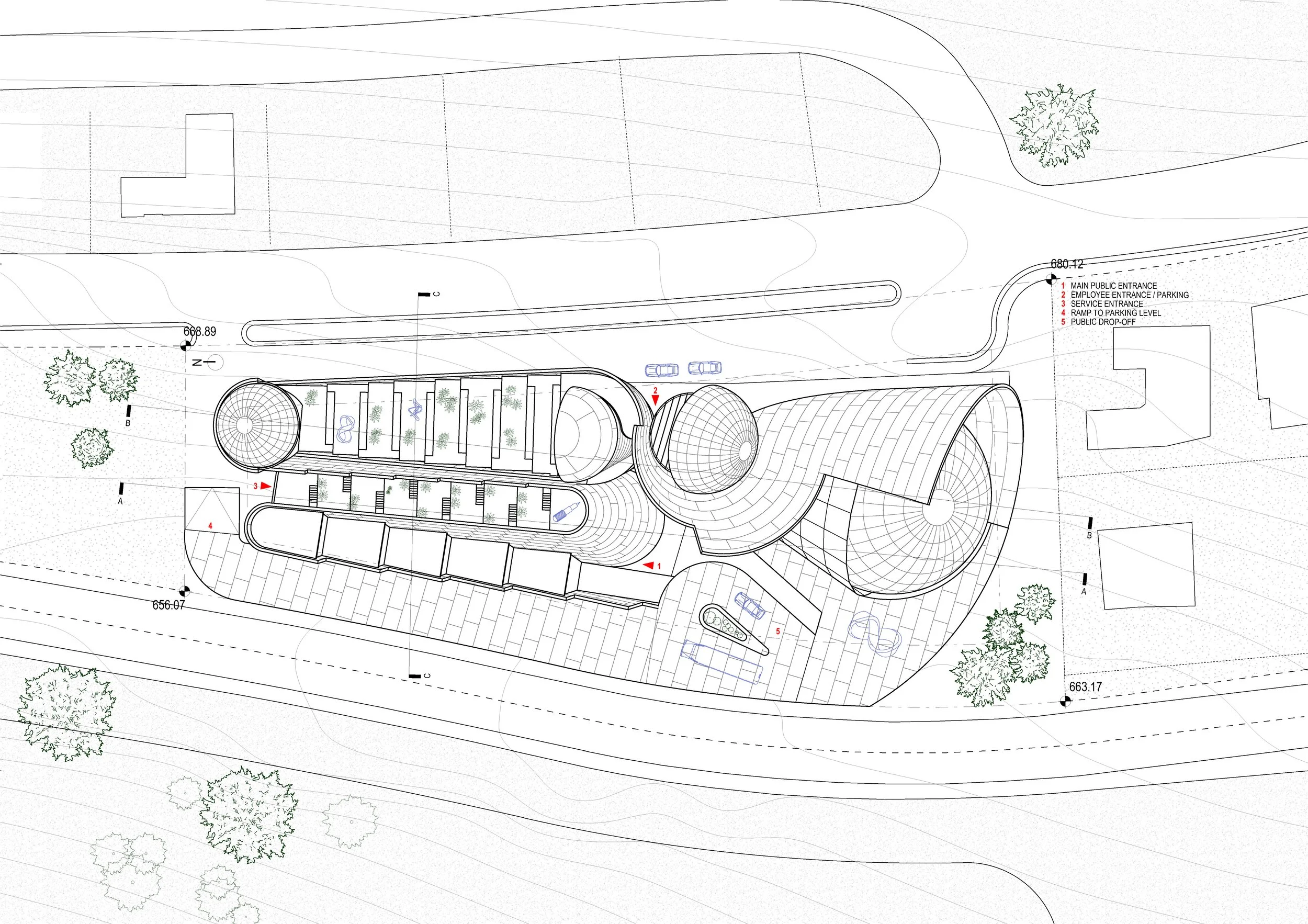
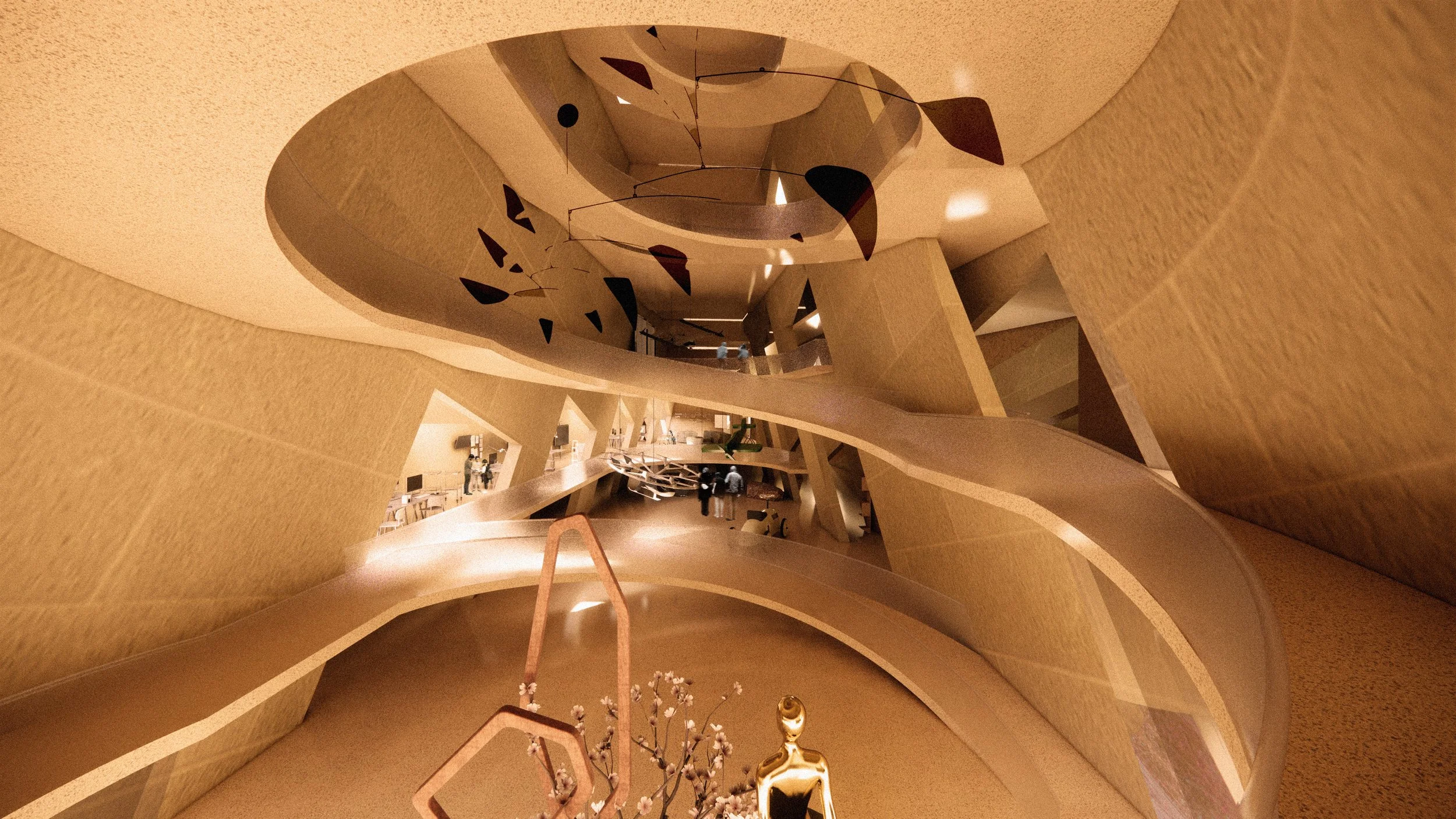
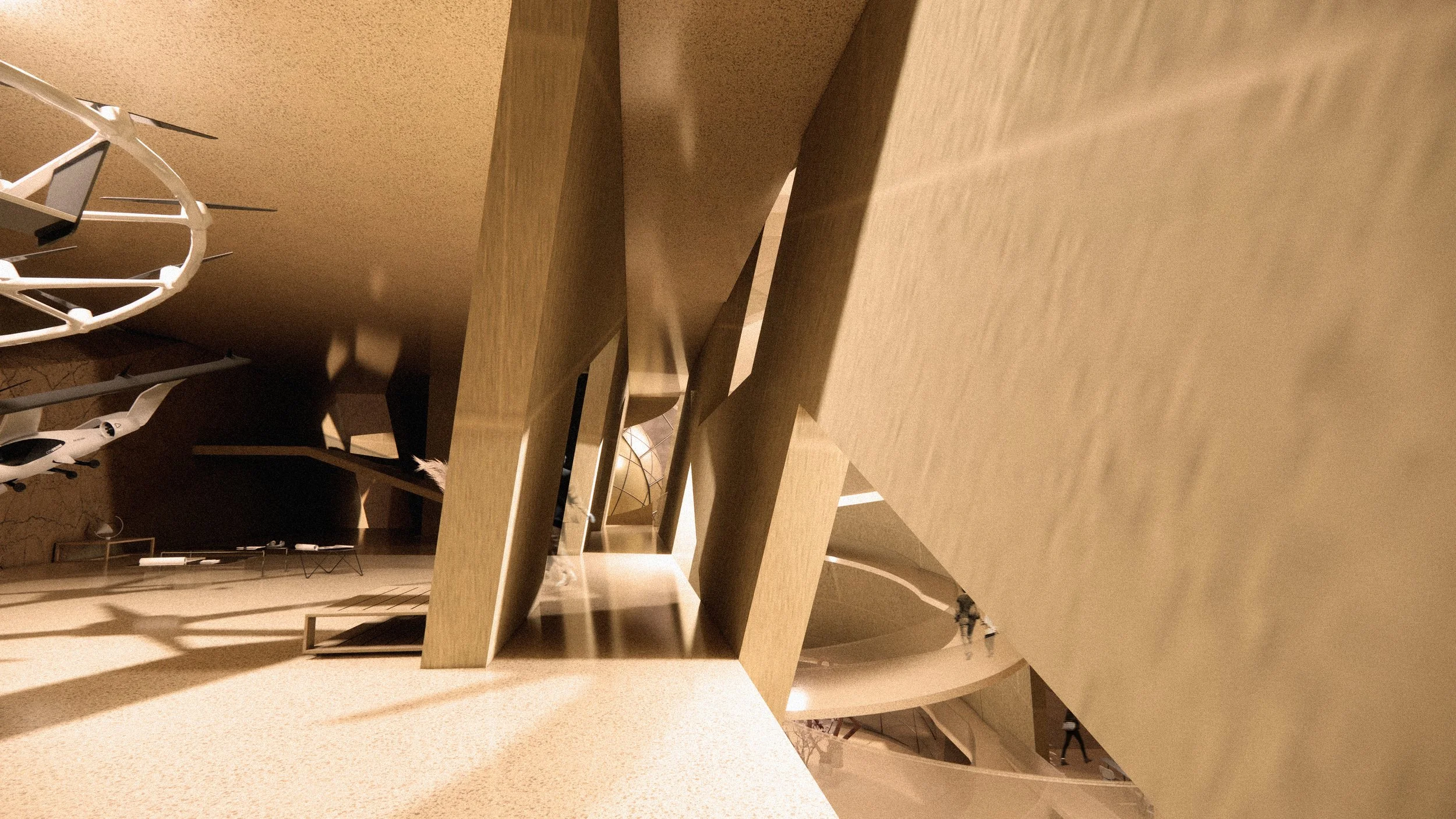
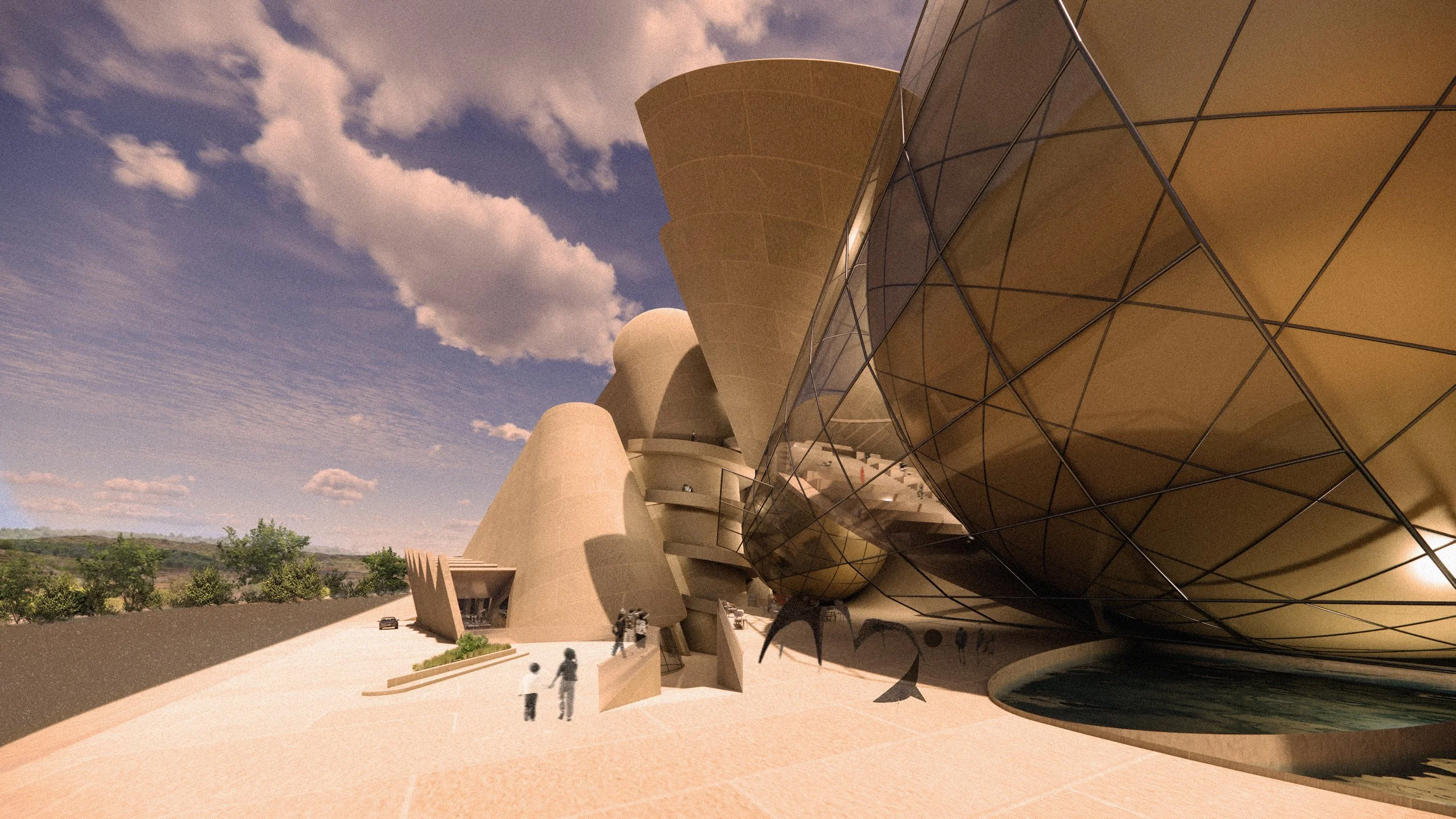
A drop-off area on the south-west corner of the site welcomes visitors arriving by bus or car upon approach from Samih il Qasem Street. This entry can be used both for the general public and employees. Visitors descend down the linear ramp from the street level plaza to the lower level plaza, where they encounter the main entrance to the front left, underneath the hovering cone. The lobby contains a ticketing area, coat check, and gift shop. It opens up into the ground floor which contains the first level of both the temporary/rotating exhibition (the middle bar, where the main entrance is), and the permanent exhibition (the bar to the right of it, along the east edge of the site). A large, towering spiral stair at the entrance past the ticketing desk leads up to the upper levels of the temporary gallery, which overlook the maker spaces on the west side, and the permanent gallery on the east side. The spiral connects to another twin spiral ramp (inverted) that allows users to move fluidly between the temporary gallery levels and the permanent gallery levels, which are split levels at 2-meter intervals. The split levels create a dynamic effect in the gallery spaces and allows for moments of sectional overlap and views up and down adjacent spaces easily.
Occupiable roof terraces cap the two main bars, serving as outdoor science and sculpture gardens, all of which are accessible through the interior floor plates of the gallery spaces, which open up directly into certain parts of the roof. The rooftop serves as an outdoor extension of the indoor gallery spaces, with visitors seamlessly flowing between inside and outside. The east roof terrace terminates in the observatory, which is also accessible from the bar below. Both rooftops offer sweeping views of the surrounding hills and valleys, facing north but primarily west towards Wadi al Dib.
The ribbon terminates in the planetarium complex on the south east edge of the site. Although it is the first thing visitors encounter visually upon approach to the building from Samih il Qasem Street, it is the terminus of the sequence, as the ribbon wall curls down to become horizontal, forming the plaza level. Additional spaces include a multi-purpose hall, café, storage space, and more offices embedded in the plinth beneath the planetarium complex.
Overall, the building can be experienced both linearly, akin to the meandering form of the ribbon, or can be traversed in a multitude of directions, particularly in the galleries where both physical and visual transitions between neighboring spaces is fluid and continuous.
Project Team: Claire Moreland, Eira Roberts, Iman Fayyad
2025