

Thin Volumes: In The Round
For the 2025 Chicago Architecture Biennial - SHIFT: ARCHITECTURE IN TIMES OF RADICAL CHANGE
Chicago Cultural Center, Chicago IL
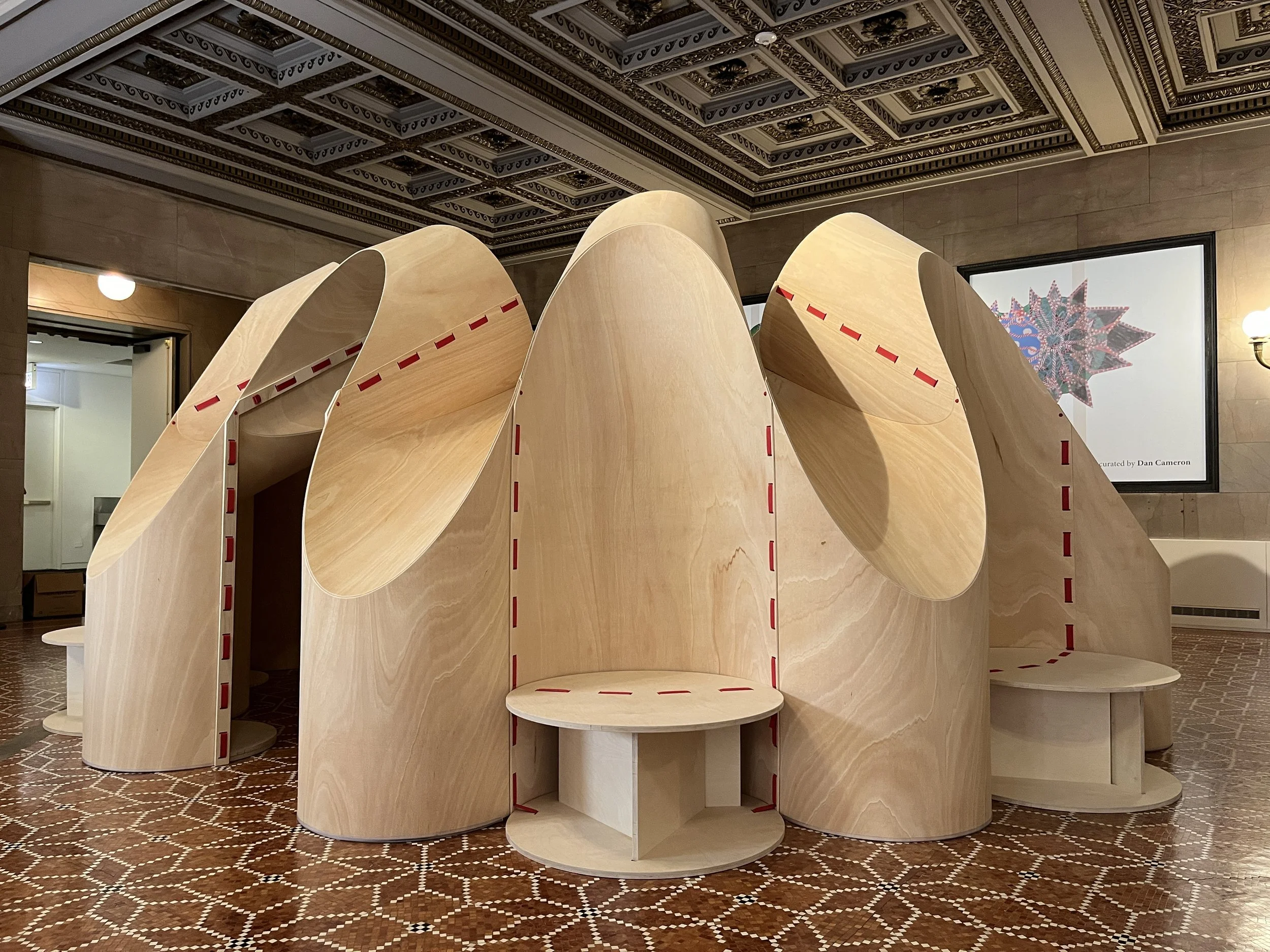
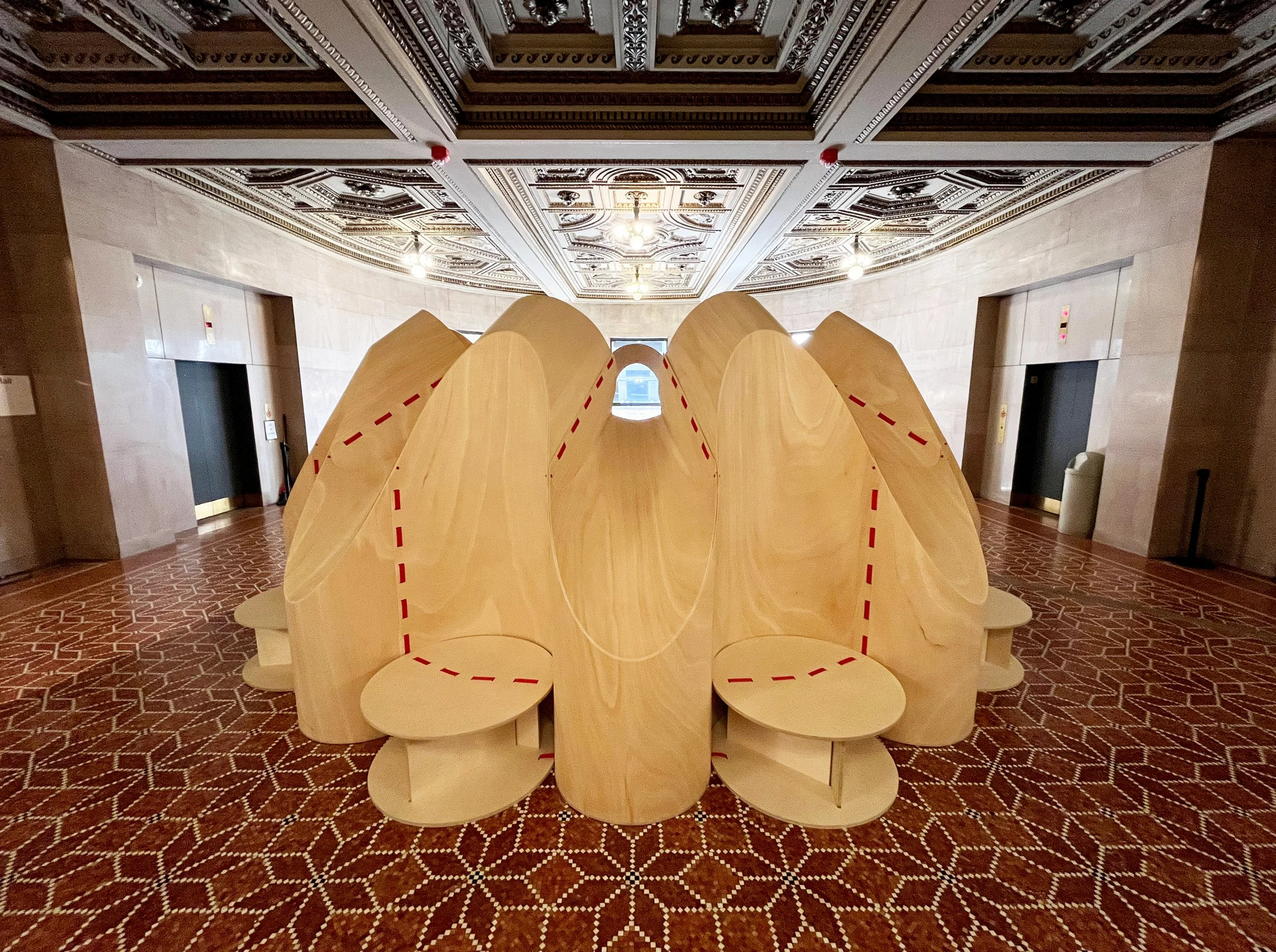
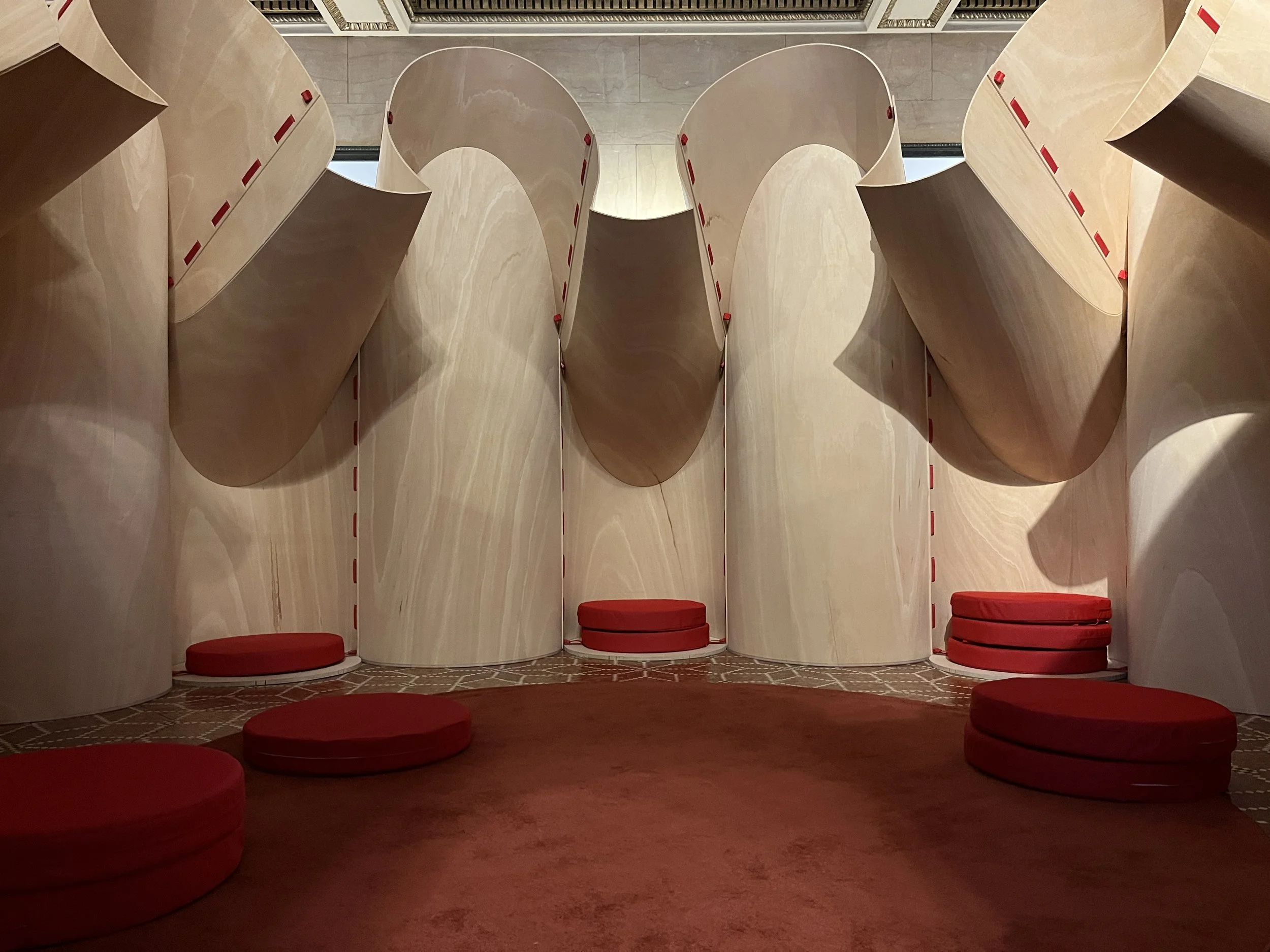
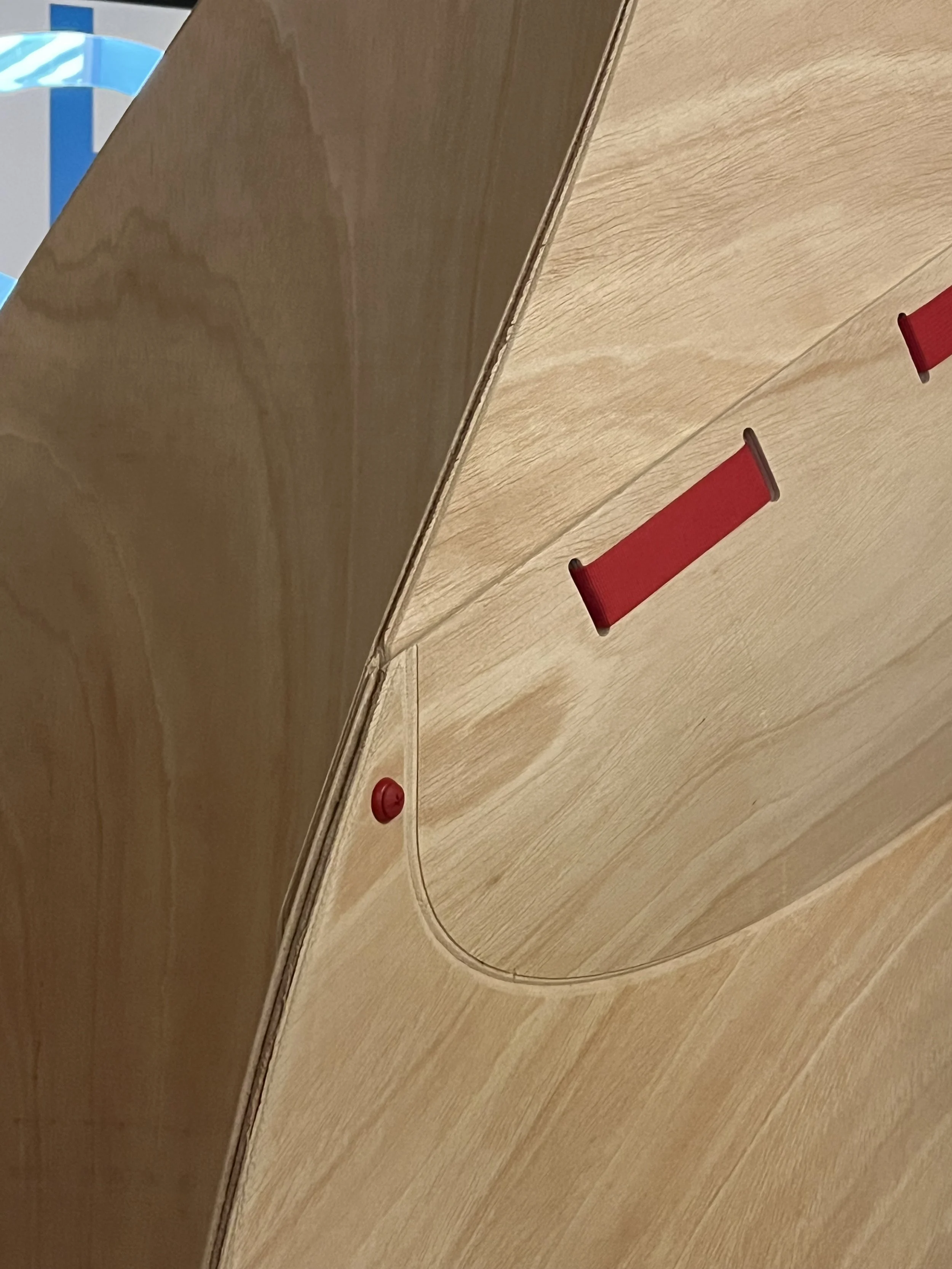
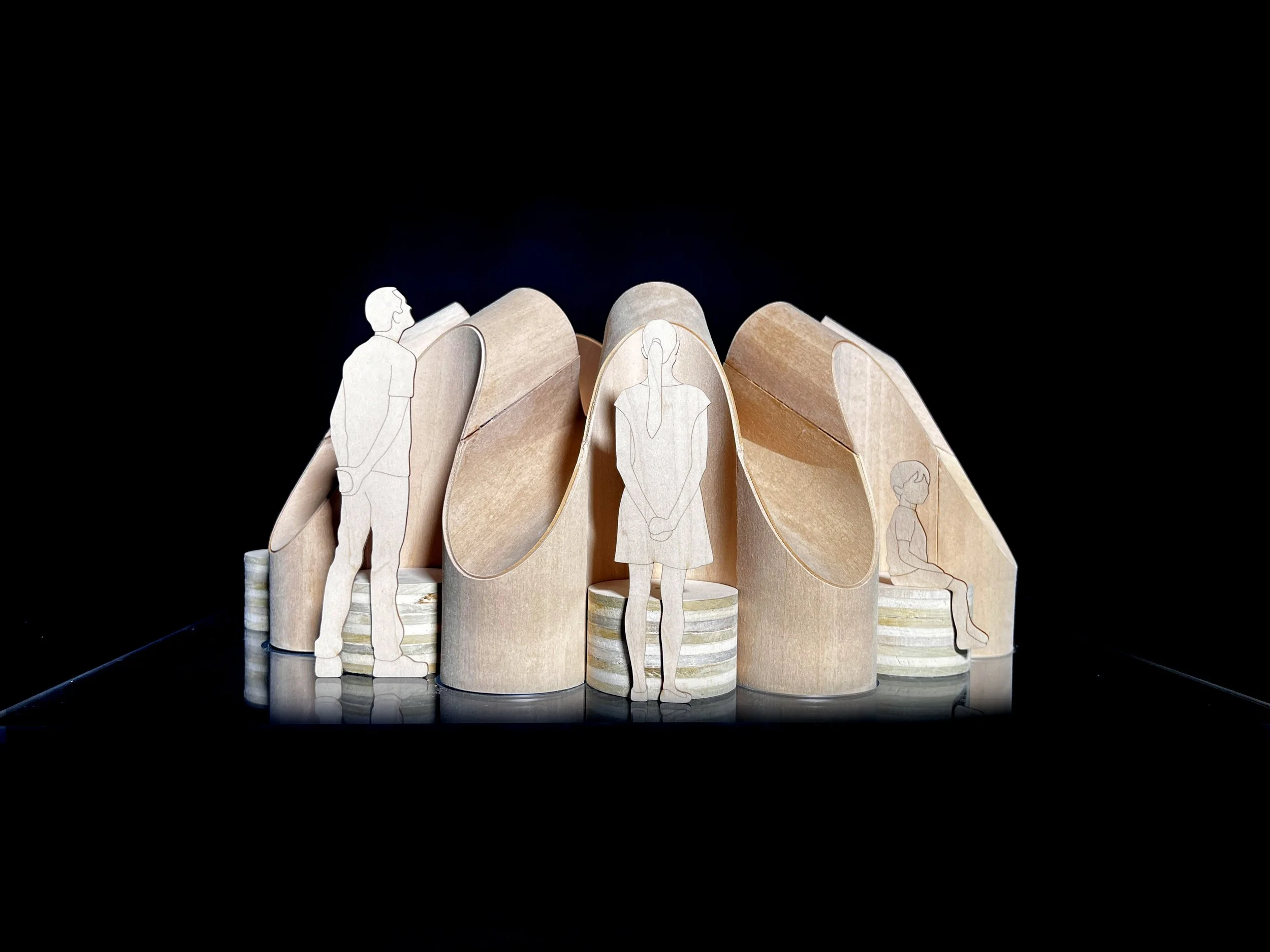
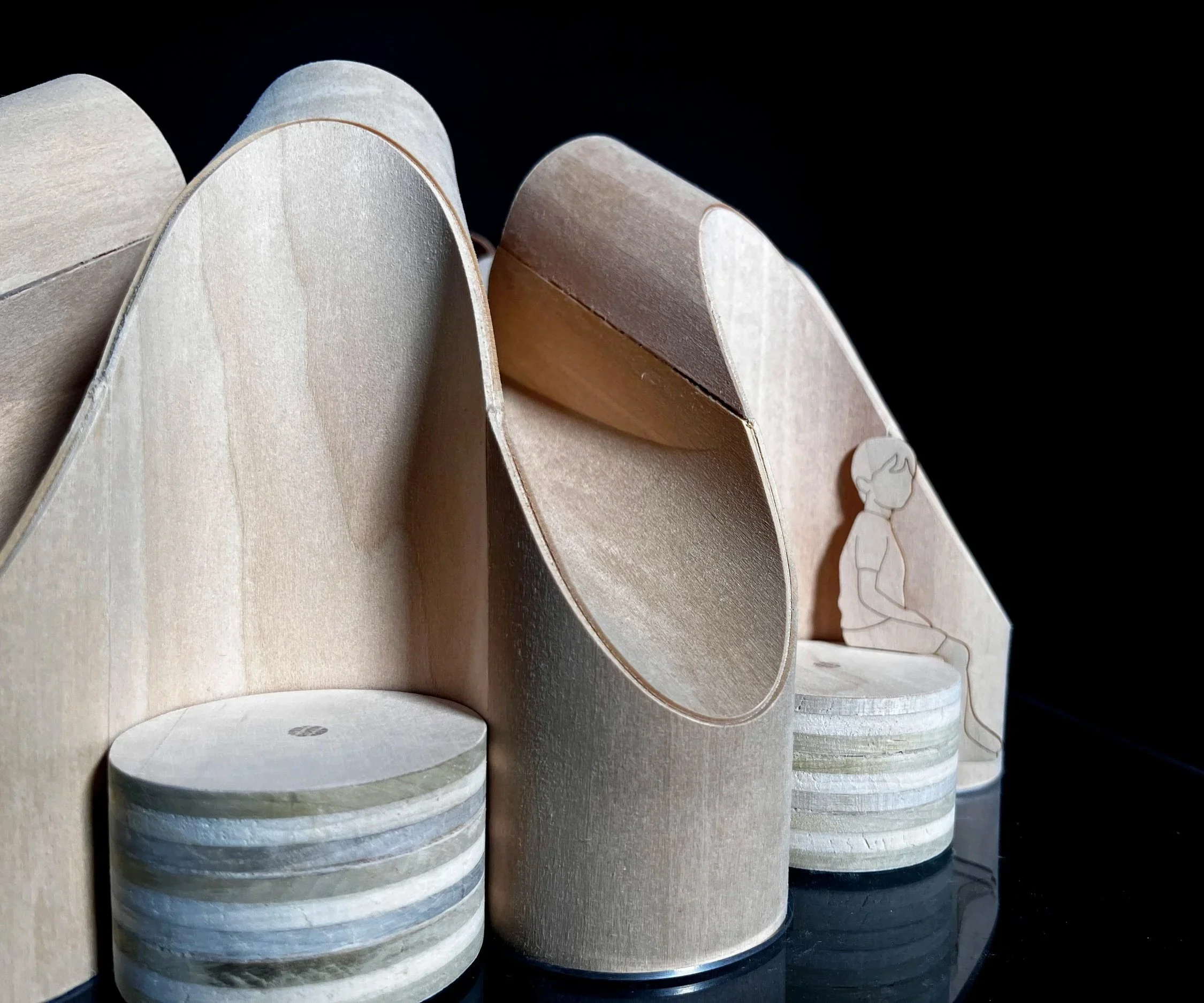
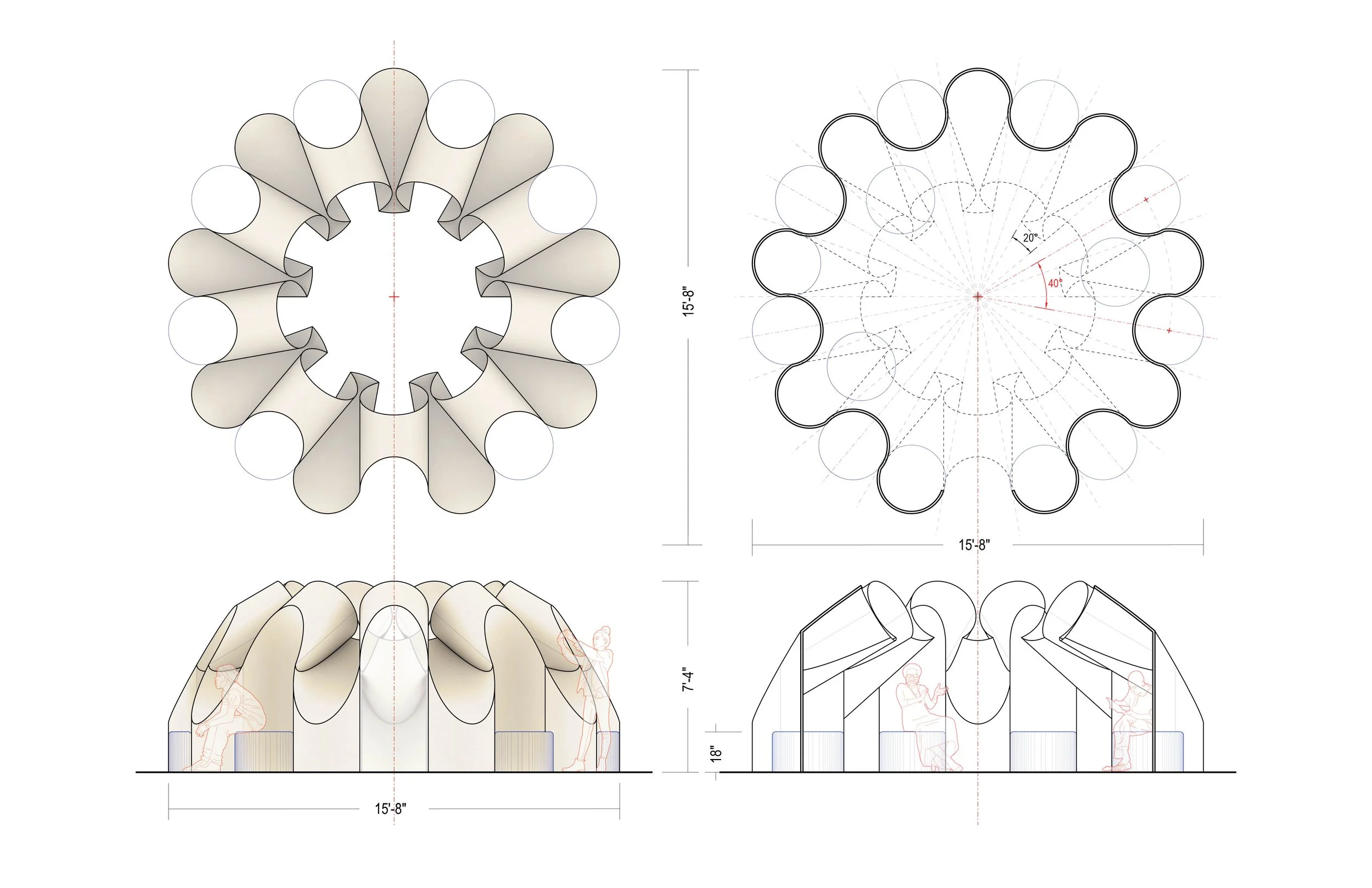
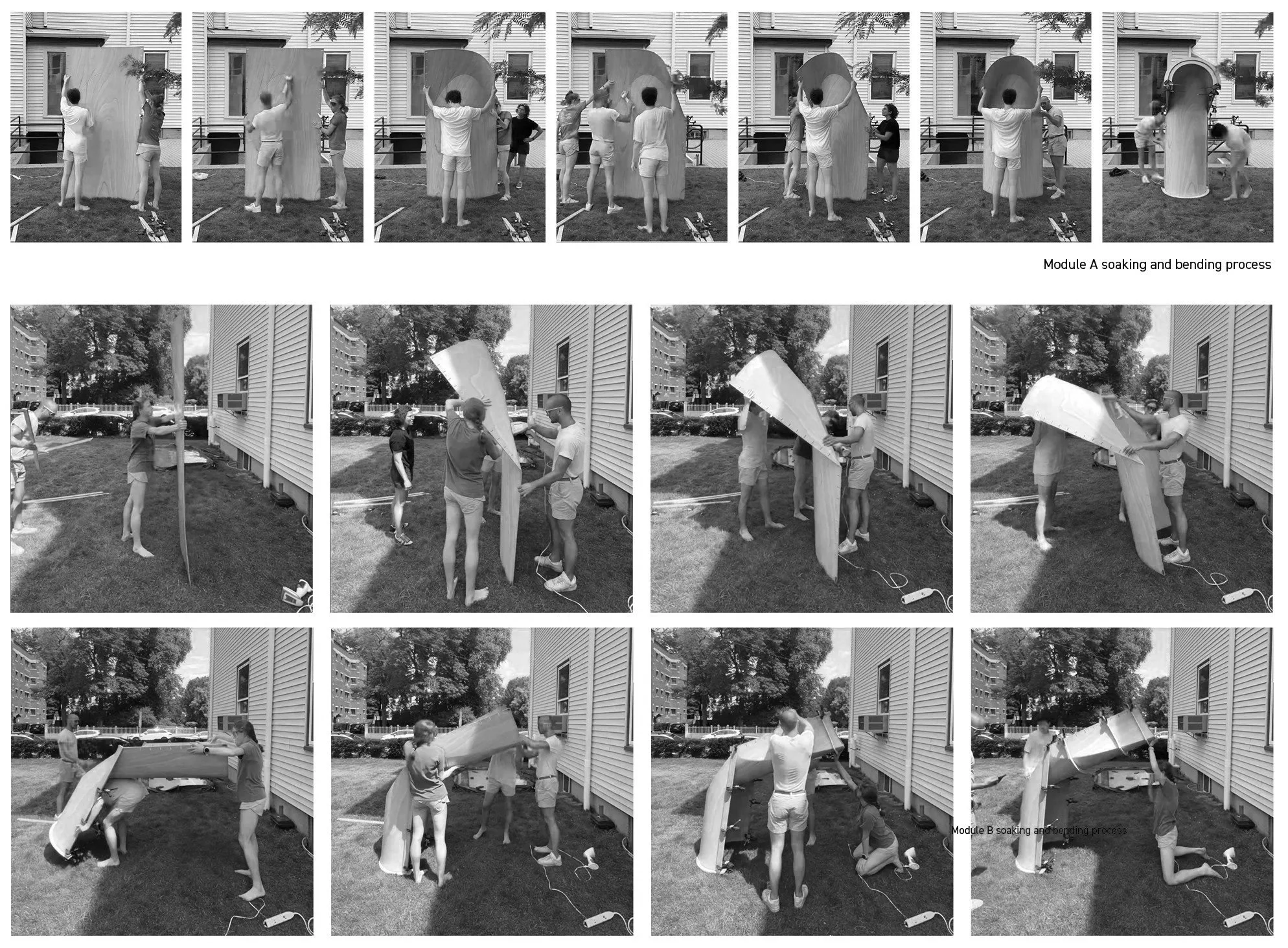
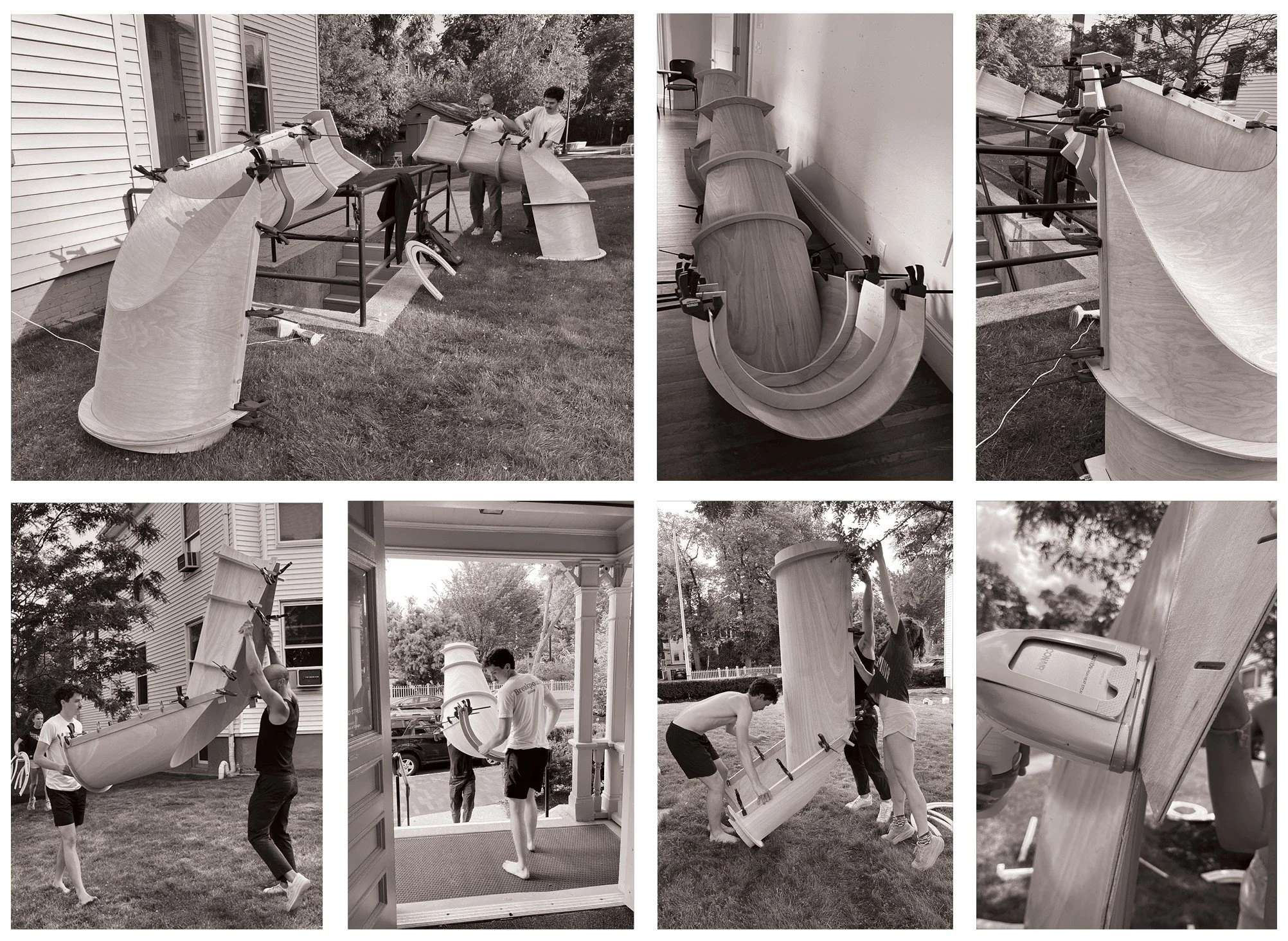
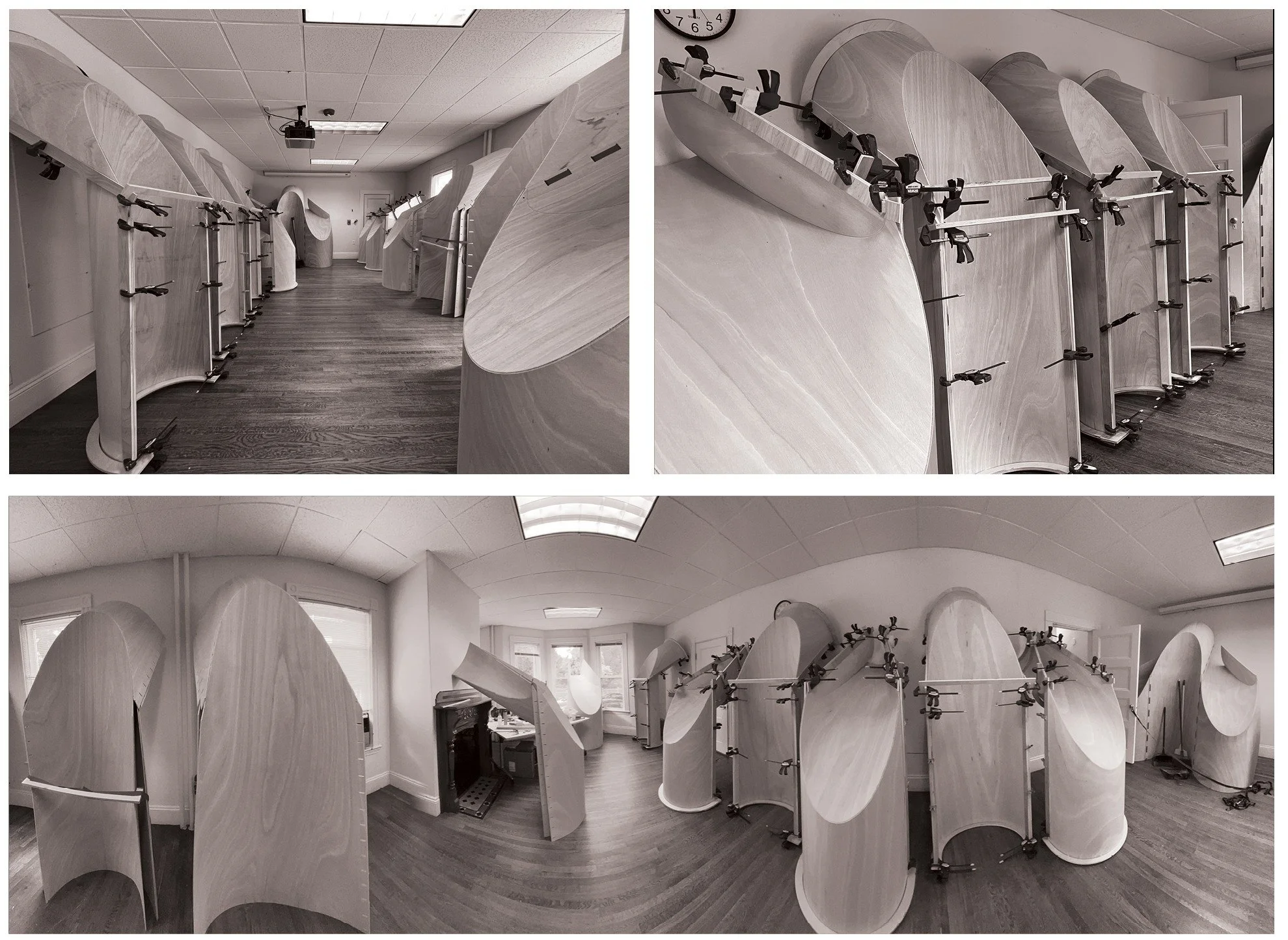
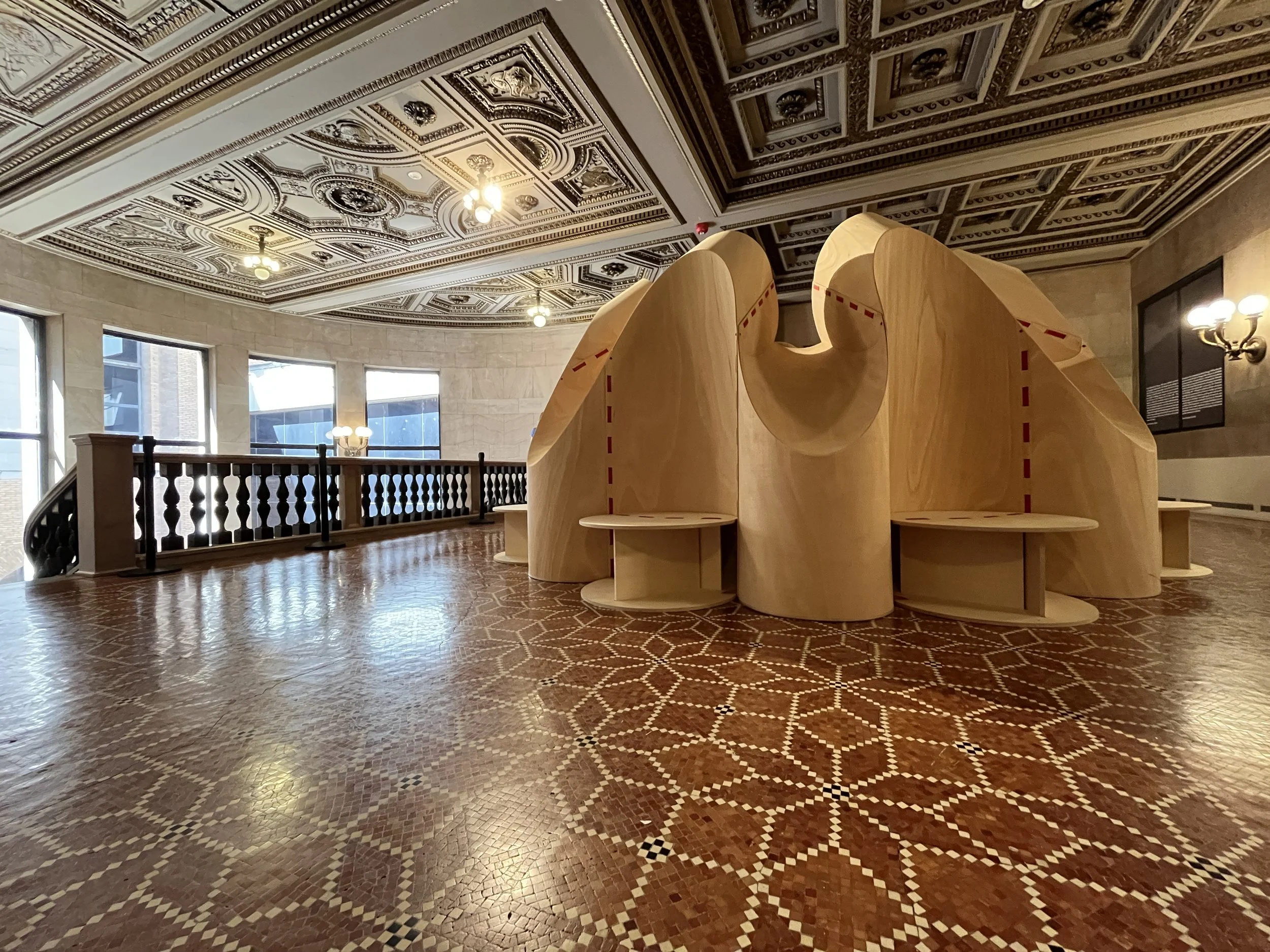
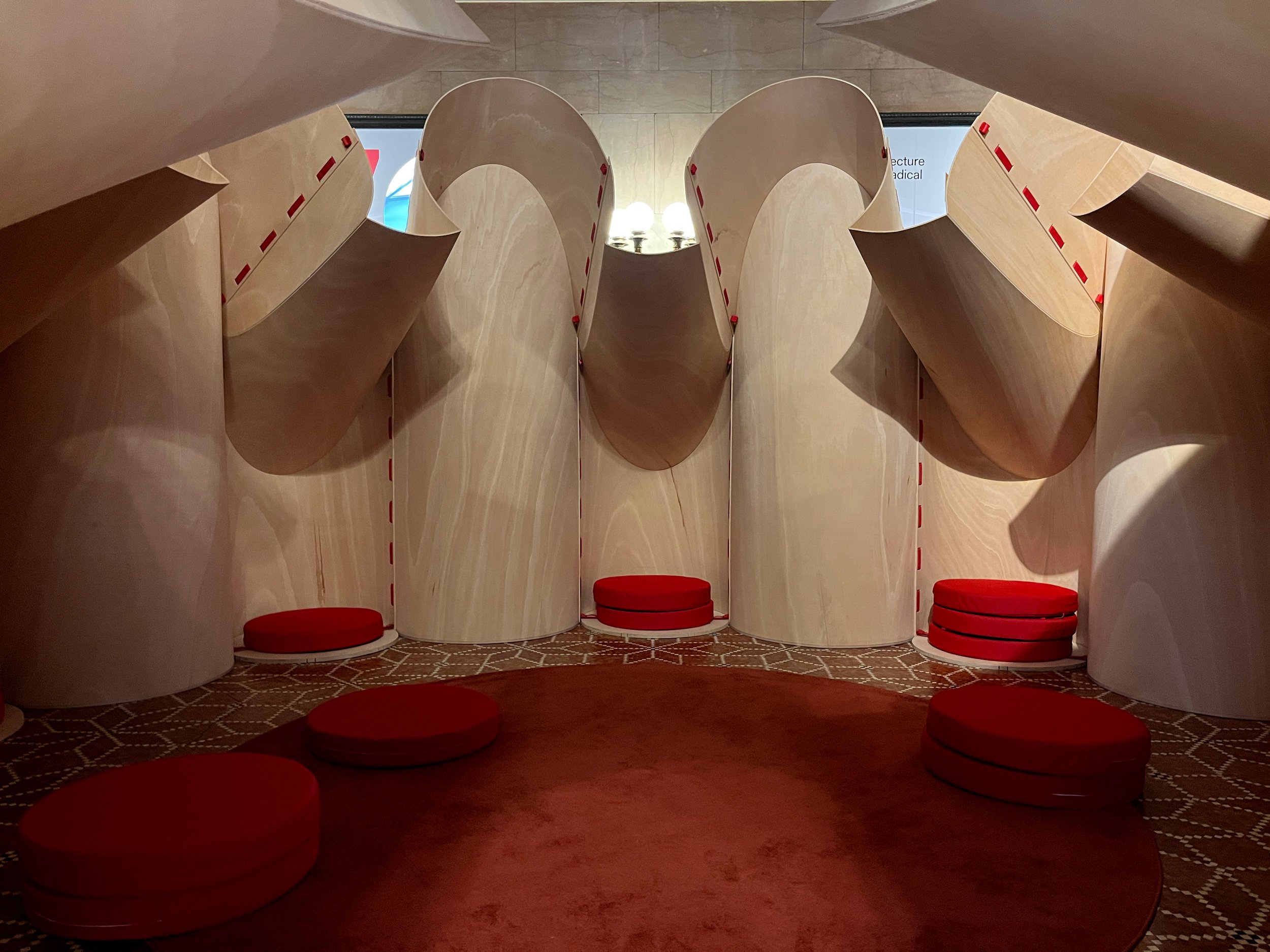
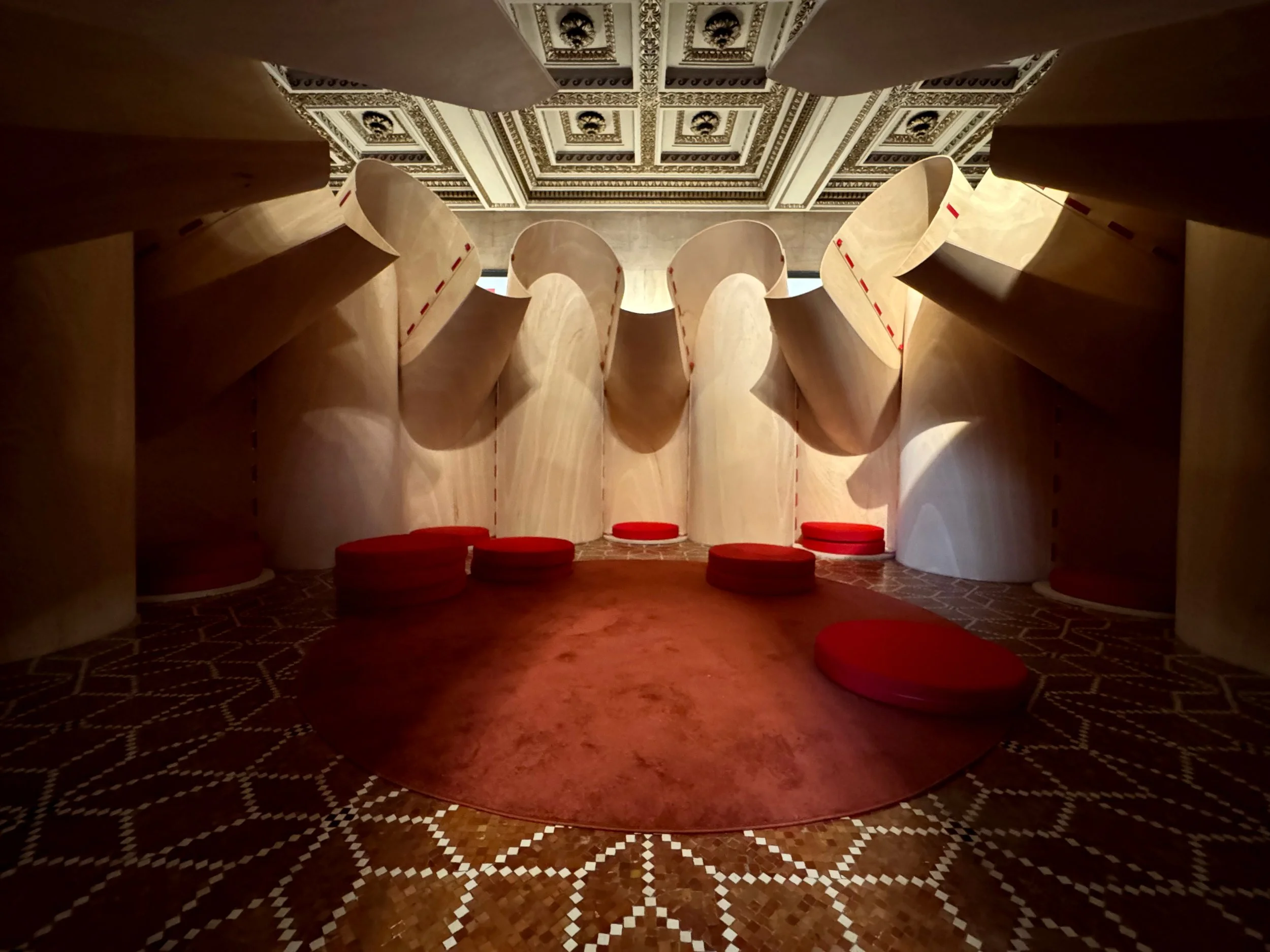
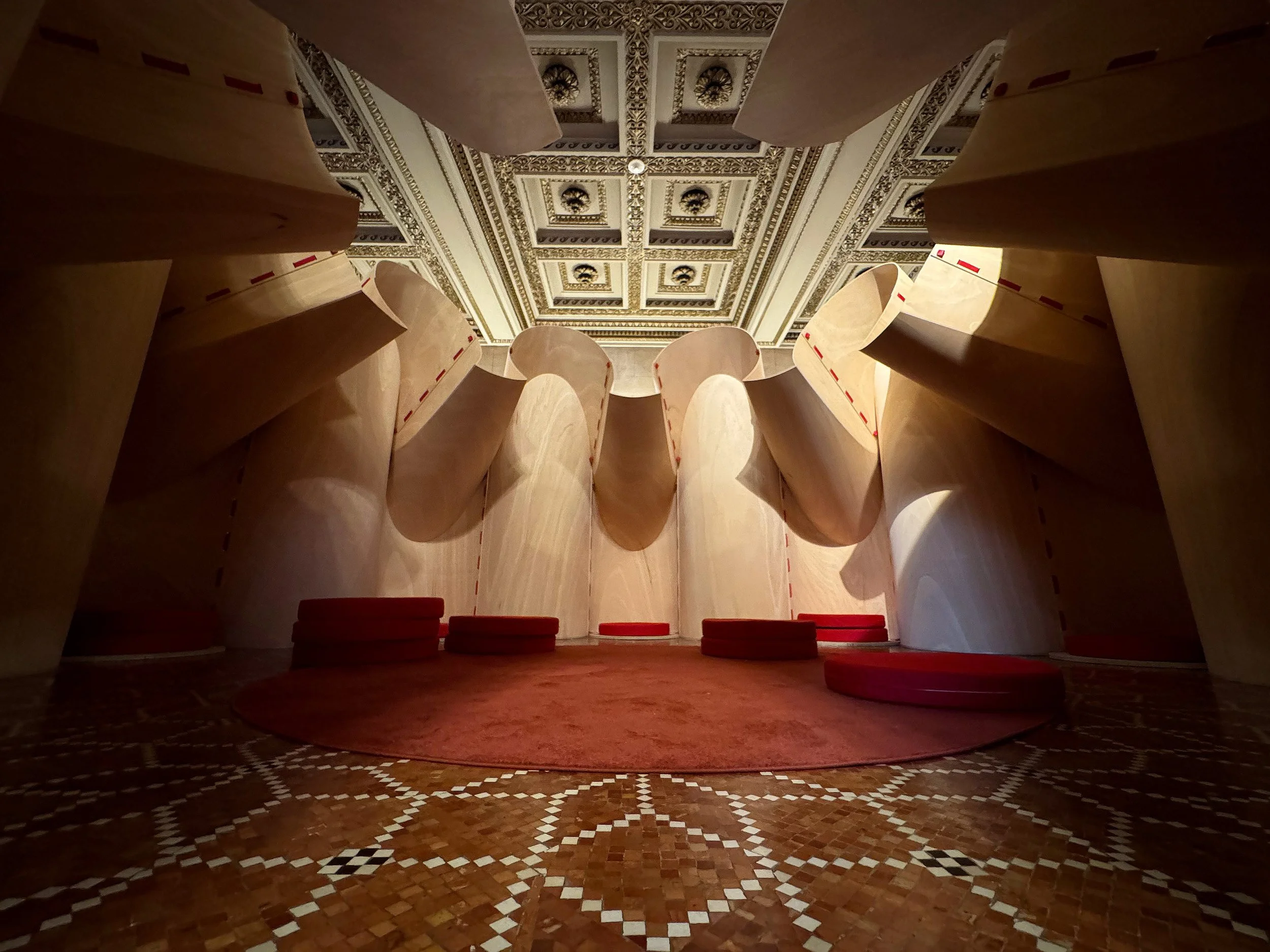
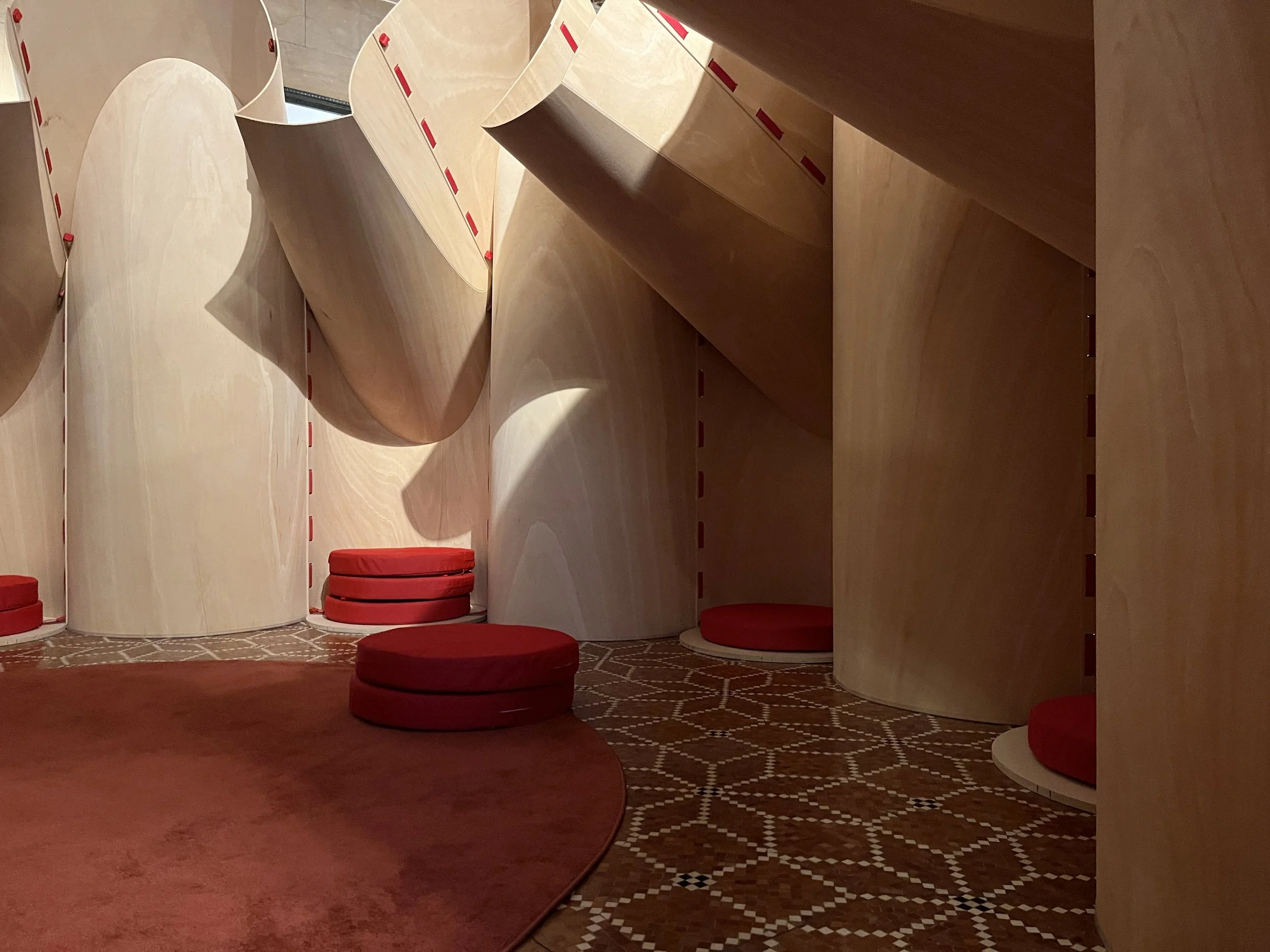
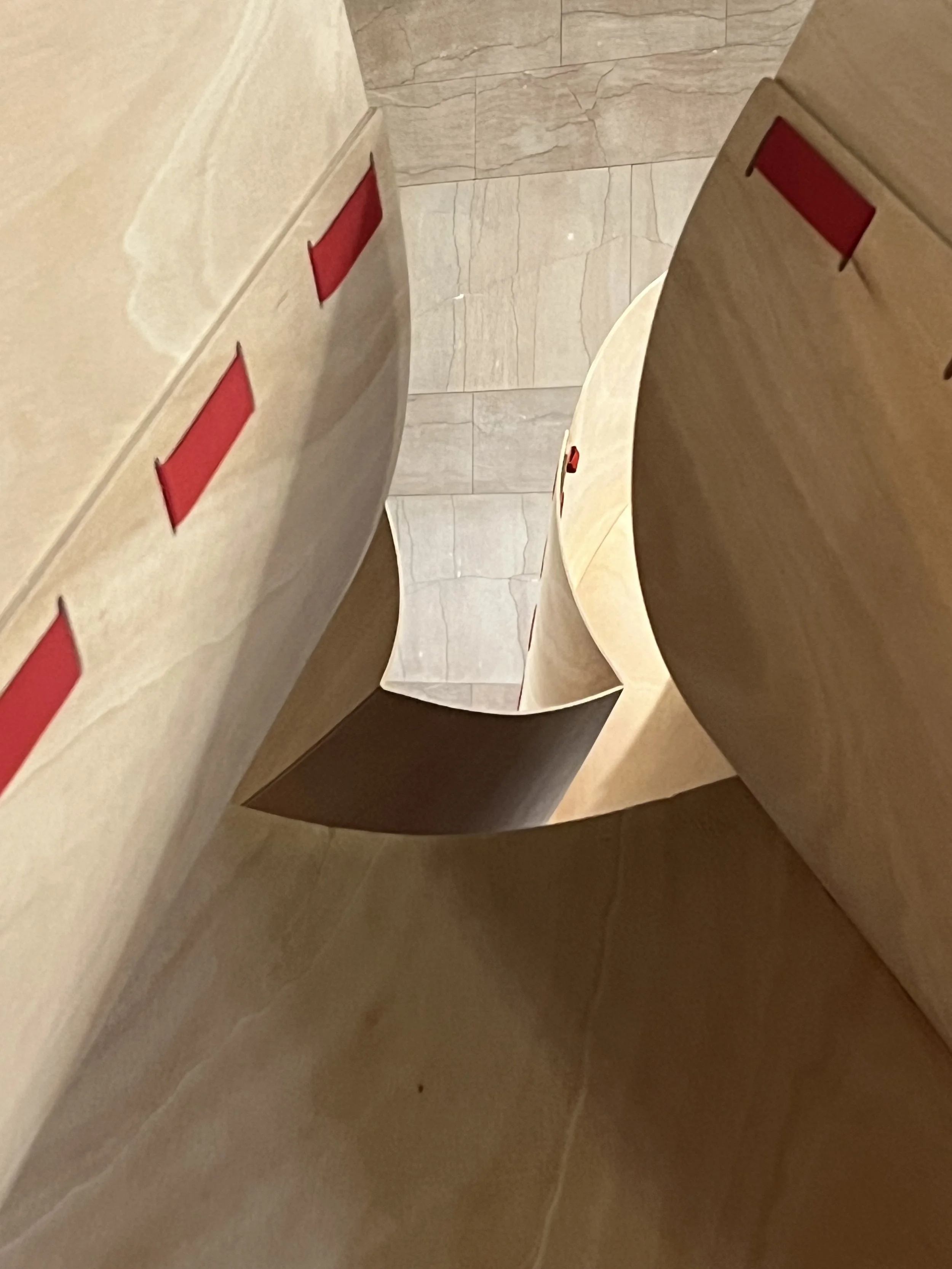
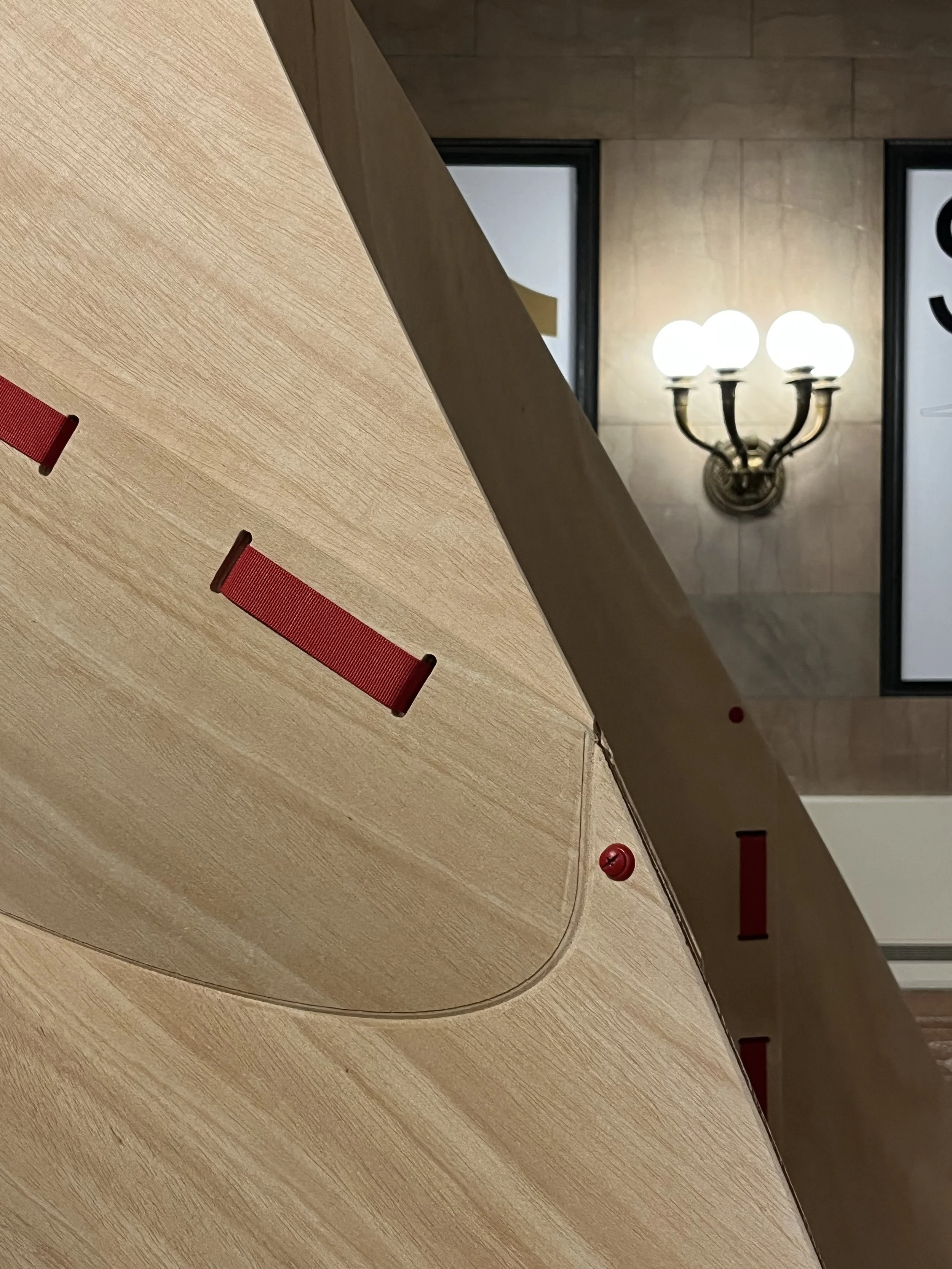
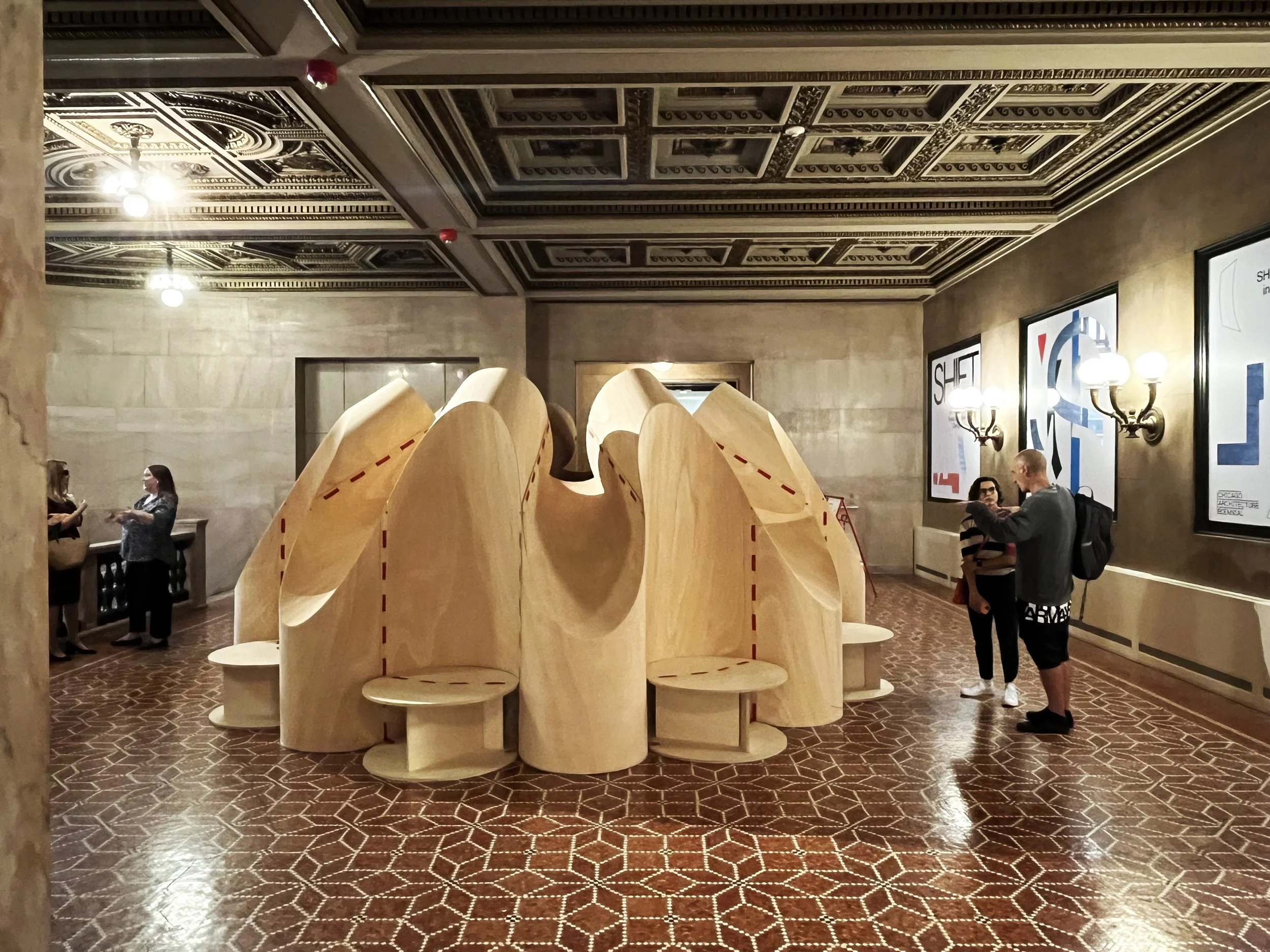
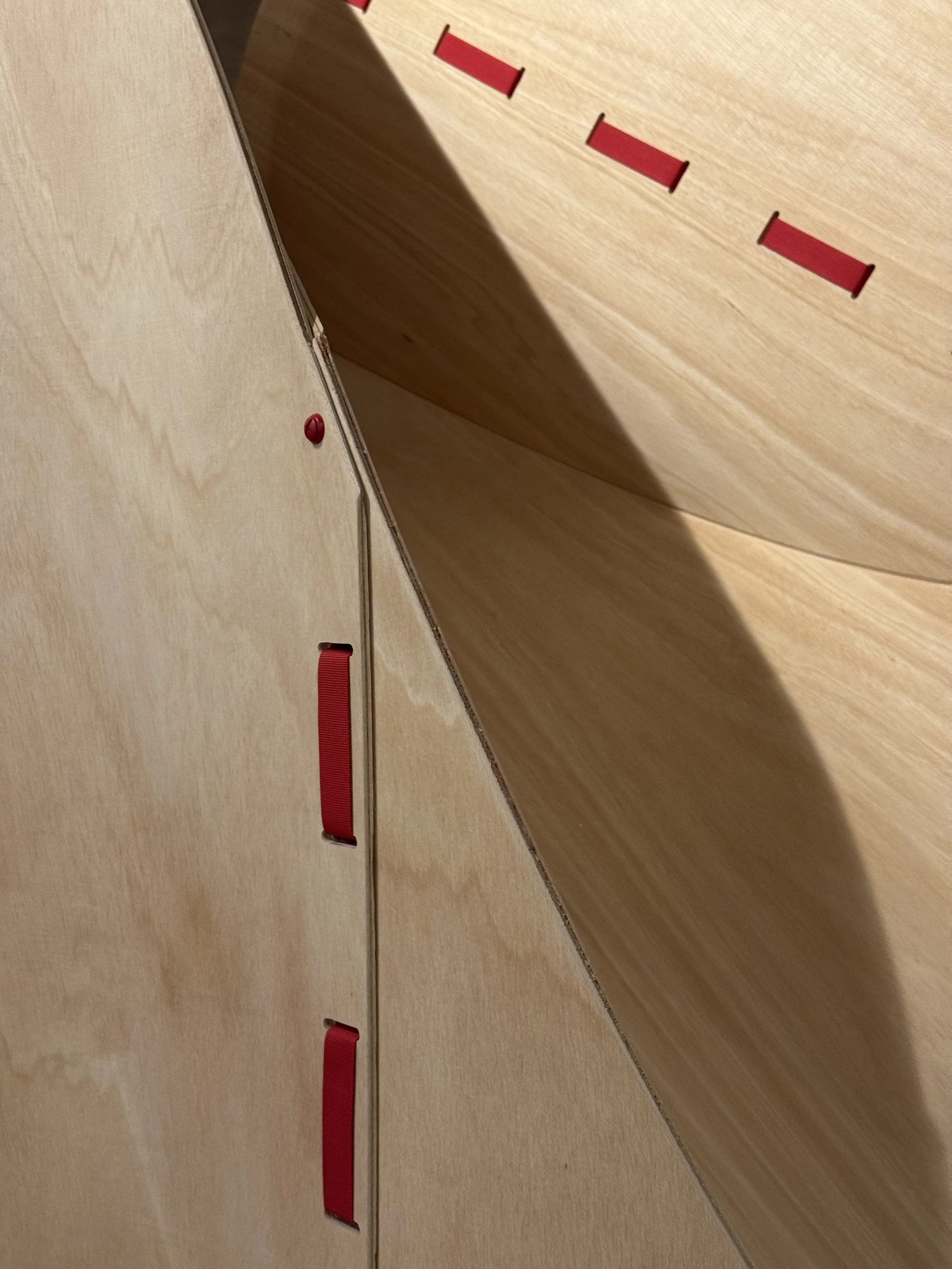
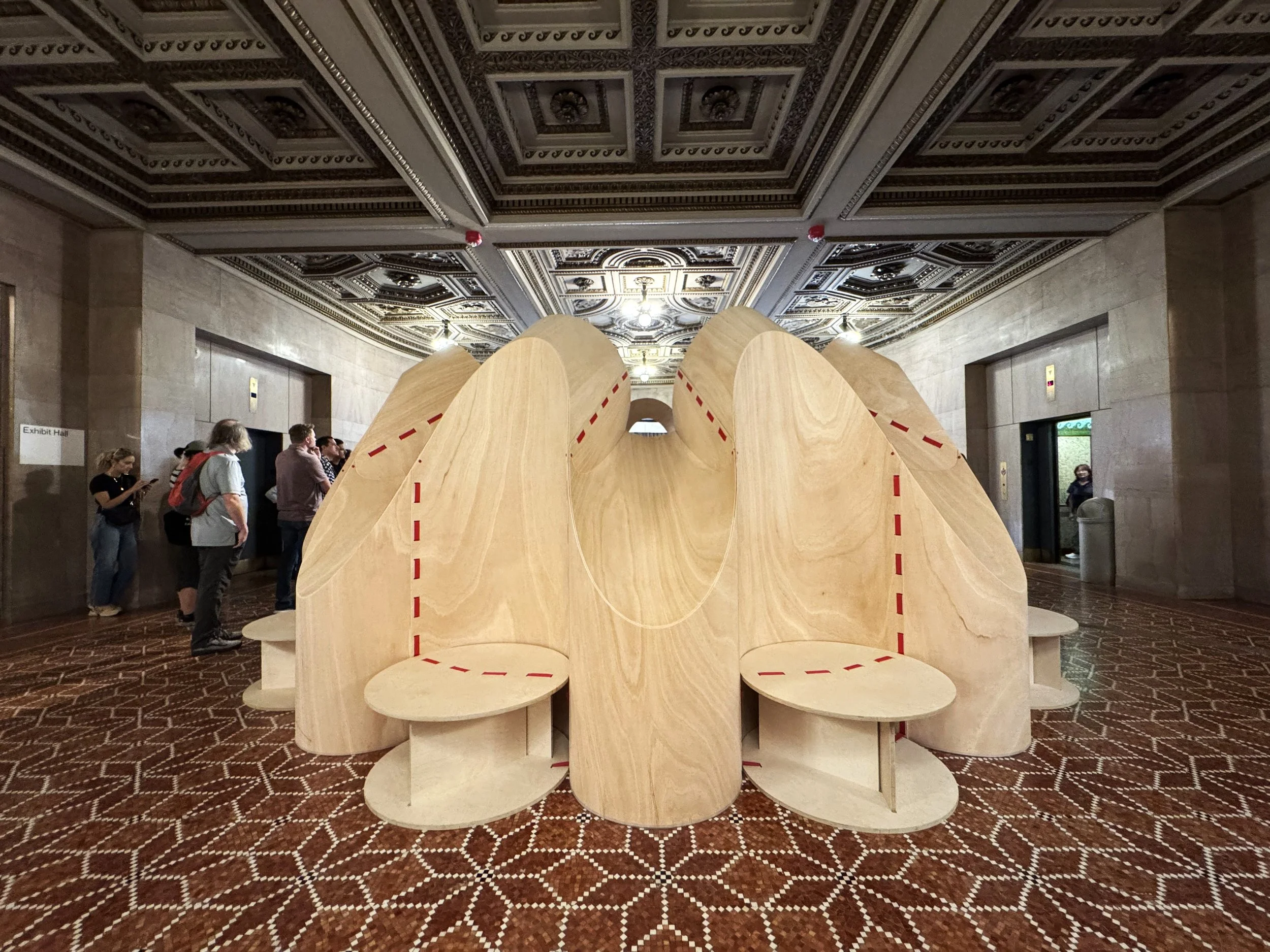
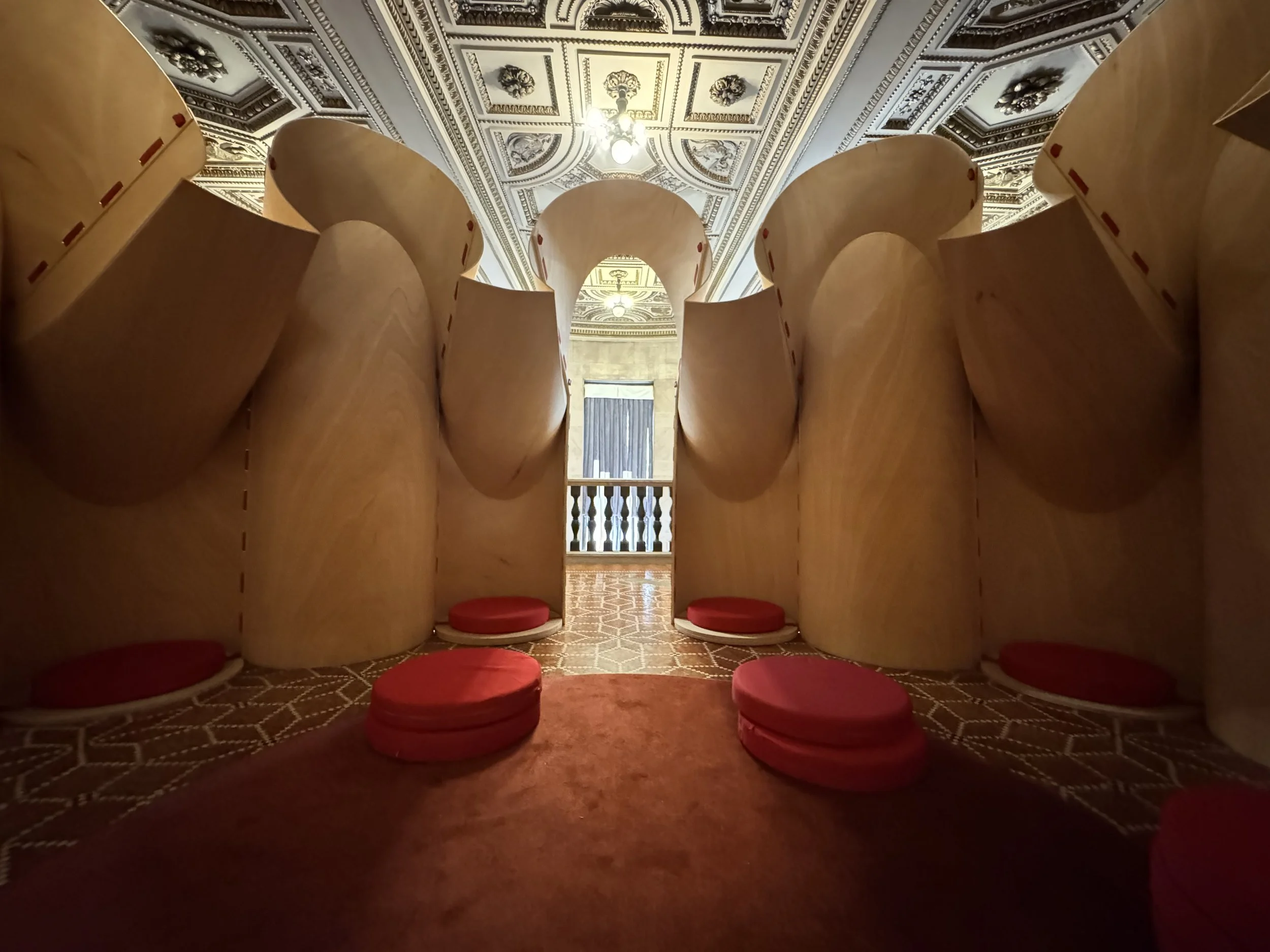
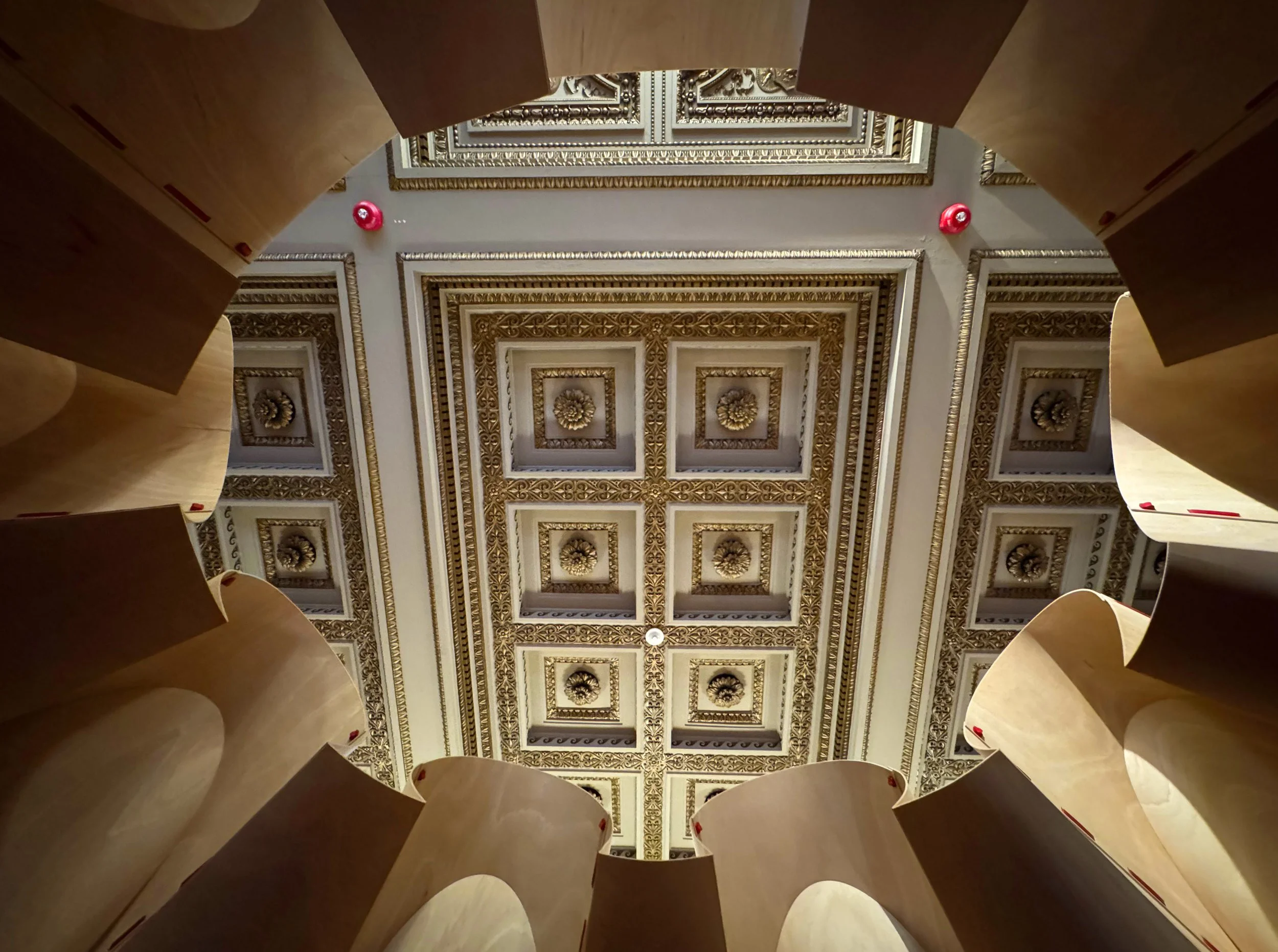
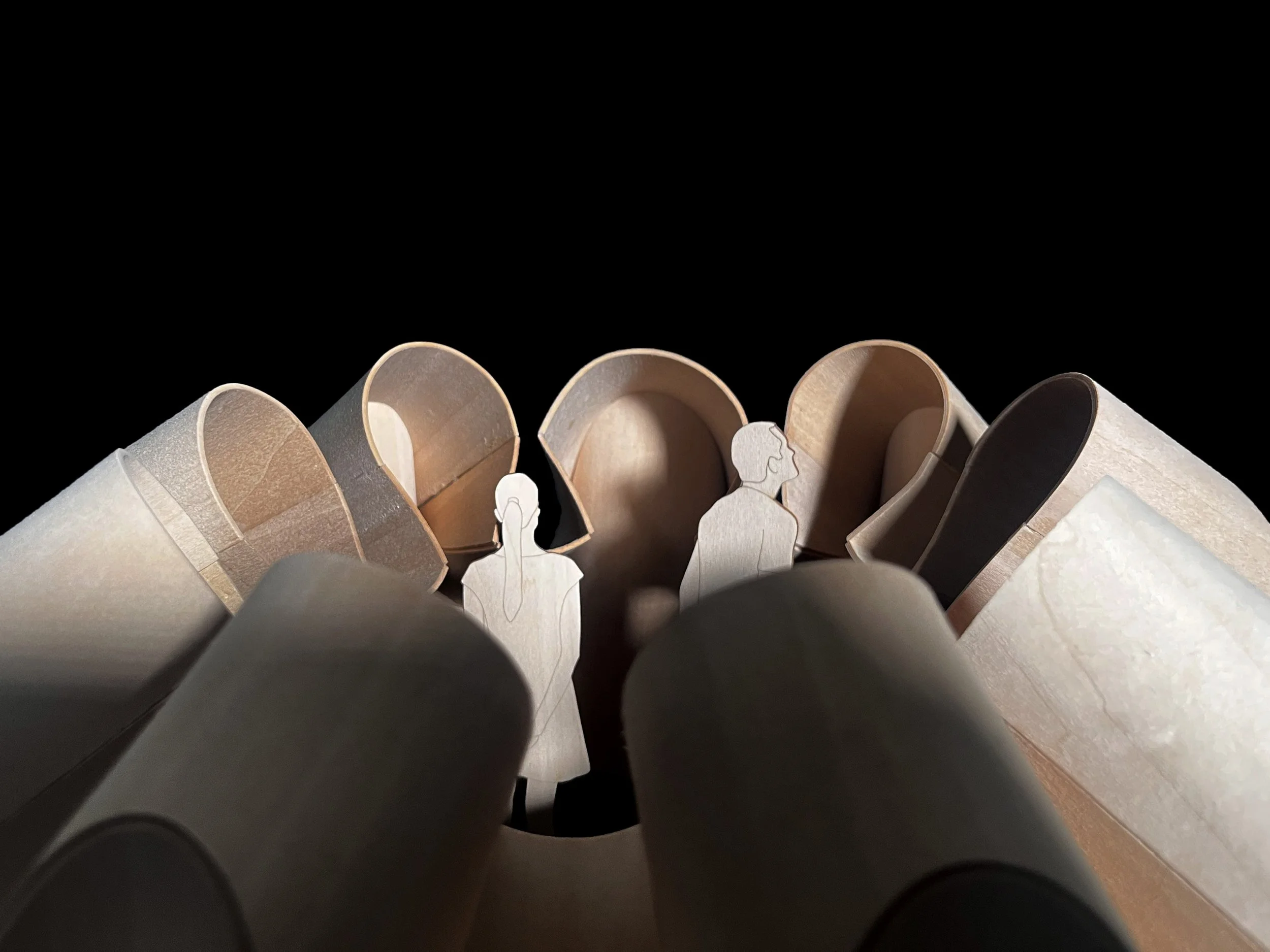
Larger than a piece of furniture but smaller than a room, this radial structure invites visitors to contemplate the spatial potentials of material transformations from thin, planar sheets to volumetric form. The space is composed exclusively of uncut 4-ft x 8-ft rectangular sheets of plywood bent into composite cylindrical forms. The radial assembly allows for the membrane to operate as a compressive structure in both plan and section, similar to a dome, while the oculus opens up the interior of the space to its surroundings above. Seating elements around the interior and exterior serve as structural anchor points for people to rest and gather. The inside of the structure offers a collective space that is inward facing and intimate, while the outward facing exterior offers more individualized spaces that are simultaneously contemplative and exposed.
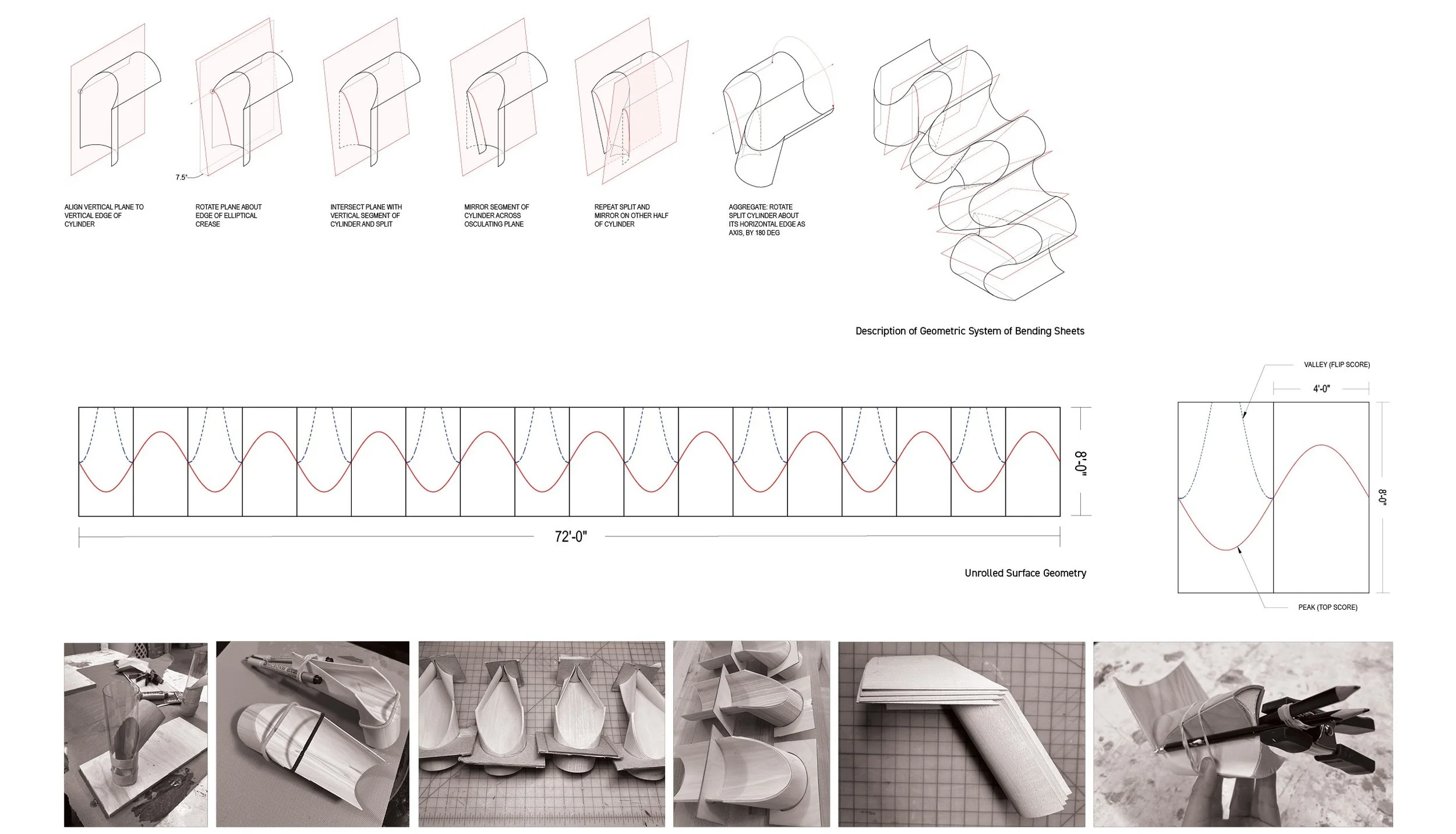
This piece is part of a larger line of work that deals with the effects of standardization in building materials on architectural typology, addressing formal exploration as a function of material waste. Rigid dimensions of rectangular stock material can bend to produce ergonomic curved geometries that respond to the scale of the human body; as such, the resultant three-dimensional forms are a direct index of the constraints of economic forces that drive capital production (size of truck beds, cost of materials, labor practices and craft, standardization and mass production, etc.), alongside structural, tectonic, and typological desires.
The trace of standard-sized sheet material (plywood, sheetrock, metal, plastics) has textured, dimensioned, and proportioned architectural typology for a long time and across global geographical regions, particularly in the construction of homes in the US after the first 4-ft x 8-ft mass-produced sheet was introduced by the wholesale plywood industry in 1928. This installation showcases the development of geometric research that proposes techniques of using standard, readily available, and affordable, sheet material to create structural geometric surfaces—forms and building types that have long been confined within exclusive social and political domains, which typically and increasingly involve unsustainable building practices in terms of labor standards, carbon footprint, community involvement, and communities served. This research aims to use simple off-the-shelf stock material and produce little to no waste in its translation from flat to curved structural surfaces.
Project Team: Willy Anmahian, Claire Moreland, Howard Timlin, Adrian Rucker
2025
Media Features:
Dezeen - Iman S Fayyad fastens plywood shelter with straps for Chicago Architecture Biennial
The Architect’s Newspaper - Society and Spectacle
Galerie Magazine - The Chicago Architecture Biennial Imagines What Comes Next
Bloomberg / CityLab - In Chicago, a Soft Architecture Biennial for Hard Times